

How to evaluate whether rubber caps can maintain performance in long-term industrial use?
- Rubber caps used in sealing, protection, and interface covering systems are often exposed to long-term compression, environmental variation, and mechanical contact conditions. Their performance stability is therefore not only determined by initial sealing fit, but also by behavior over extended service cycles.
- Key evaluation factors include elasticity retention after repeated compression, resistance to permanent deformation, and sealing stability under vibration or minor pressure fluctuations. These properties determine whether the rubber cap can maintain consistent contact with the protected interface during long-term use.
- In addition, material aging characteristics play an important role. Exposure to temperature changes, humidity, oils, or chemical media can gradually affect hardness and flexibility. Materials such as EPDM, NBR, and silicone are selected based on their ability to maintain stable physical properties under different working environments.
- Dimensional stability during repeated installation and removal is also an important indicator, especially in applications involving mechanical equipment, piping systems, or industrial assemblies requiring frequent maintenance.
What production and quality factors influence consistency in rubber cap manufacturing?
- Consistency in rubber cap production is determined by the combination of material formulation control, molding accuracy, and process stability throughout the manufacturing cycle.
- Rubber compound formulation is one of the most critical factors, as variations in material mixing ratios can directly affect hardness, elasticity, and compression performance. Stable formulation control ensures that each batch maintains consistent physical properties.
- Mold precision also plays a key role in dimensional accuracy. Small deviations in cavity design or wear in tooling can lead to tolerance differences, which may affect sealing fit in industrial applications.
- During production, compression molding or injection molding processes require controlled temperature, pressure, and curing time. These parameters ensure uniform density and structural integrity of the final product.
- Finally, quality inspection processes such as dimensional measurement, compression testing, and surface defect checking are used to ensure consistency before shipment, especially for applications requiring stable sealing performance across large production volumes.
Top 10 Rubber Caps Manufacturers in China(In No Particular Order)
Haining Chaoyue Seals Co., Ltd.
- HAINING CHAOYUE SEALS CO., LTD focuses on rubber sealing components including rubber caps designed for mechanical protection, pipe sealing, and industrial interface covering applications. The company operates with a full production system covering rubber compound formulation, mold development, compression molding, and post-processing inspection.
- Rubber cap products are produced using NBR, EPDM, and silicone materials depending on temperature resistance and chemical exposure conditions. Structural design is adjusted according to sealing diameter, installation tolerance, and compression fit requirements.
- The production system includes mold precision control, batch stability testing, and dimensional inspection processes to ensure consistency in long-term sealing performance.
OEM customization supports structural adjustment for different interface sizes, hardness variation based on compression requirements, and surface treatment for enhanced sealing stability.
Core capabilities include:
- rubber compound formulation for sealing applications
- compression molding and injection molding production
- dimensional tolerance control for sealing interfaces
- OEM customization based on equipment structure
- multi-material selection for different working environment
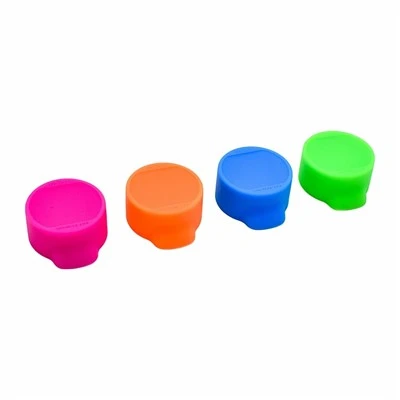
XJ Rubber
Focuses on molded rubber caps used in pipe protection and equipment sealing systems with EPDM and NBR materials
HZ Sealing
Produces rubber caps for industrial equipment covering and protection applications with compression molding processes
SJ Elastomer
Specializes in silicone rubber caps designed for temperature-sensitive environments and electronic protection systems
GD Rubber
Focuses on rubber sealing caps for mechanical assemblies and transport protection applications
JS Polymer
Produces rubber caps and protective sealing components using injection molding and multi-compound rubber materials
YK Industrial
Specializes in rubber protective caps for hydraulic and pneumatic equipment interface protection
WZ Rubber
Focuses on compression-molded rubber caps for structural sealing and mechanical interface protection
NB Sealtech
Produces rubber caps used in fluid system sealing and equipment isolation applications
SH Precision
Focuses on precision rubber caps designed for tight-tolerance sealing and mechanical interface protection
Rubber Cap Application Characteristics
Rubber caps are designed to maintain sealing integrity under repeated compression and environmental variation conditions.
Material selection directly influences performance stability, with EPDM offering temperature and weather resistance, NBR providing oil resistance, and silicone being used in higher temperature environments.
Structural design is generally optimized for installation fit accuracy, compression rebound behavior, and long-term deformation control under continuous use cycles.
Production consistency plays a key role in ensuring batch-to-batch dimensional stability, especially in applications involving mechanical interfaces or fluid system protection.
FAQ
Common materials include NBR, EPDM, silicone, and natural rubber, selected based on temperature resistance and chemical exposure conditions.
2. What affects sealing performance of rubber caps?
Sealing performance is mainly influenced by material elasticity, compression design, and dimensional accuracy of the molding process.
3. Are rubber caps customizable?
Yes. Customization typically includes size adjustment, hardness variation, color selection, and structural design based on installation requirements.
4. Where are rubber caps commonly applied?
They are used in mechanical equipment protection, pipe sealing, hydraulic systems, and interface covering applications.
5. What production methods are used?
Main methods include compression molding, injection molding, and post-curing processing depending on material type and application requirements.