


- Integrated Dual-Port Body
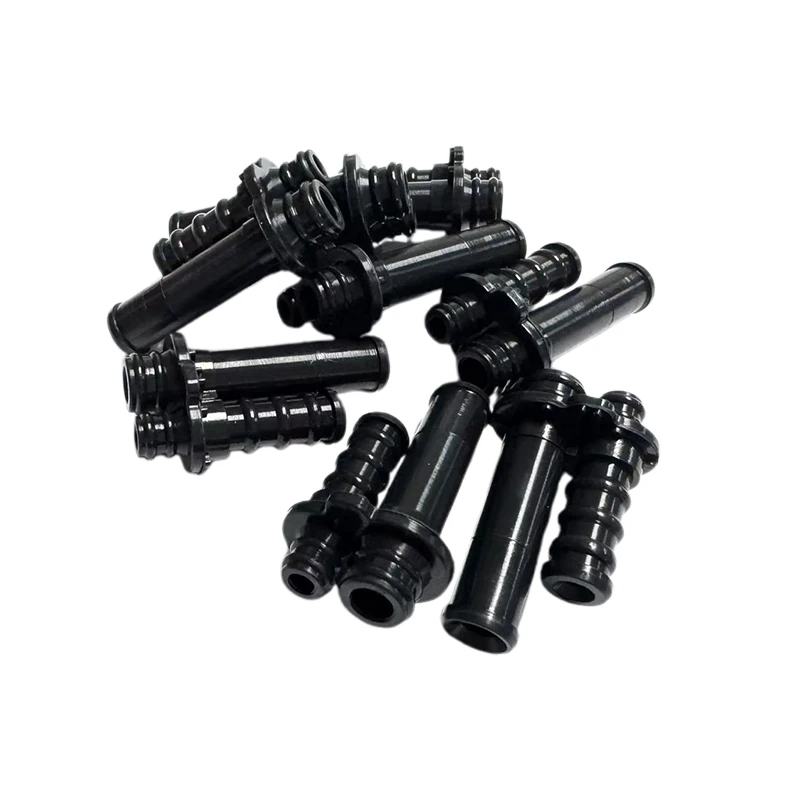
The connector combines two barbed hose ports into one molded rubber body, allowing two coolant lines to be connected through a single component.
- Barbed Port Geometry
Each port is formed with raised barbs around the outer diameter to create mechanical engagement with the hose after insertion.
- One-Piece Molded Construction
The two ports and central connector body are molded as one component, eliminating separate joints between the hose connection sections.
- Compact Connection Layout
Port spacing, overall length, and body geometry can be configured around the available space at the oil cooler, radiator, or filter housing.

Dual Hose Connection & Retention
- Hose Inner Diameter Matching
The barbed outside diameter is selected according to the hose inner diameter to provide the required interference and insertion fit.
- Barbed Retention
The raised barb profile engages with the inside wall of the hose and helps resist axial movement after the hose is fully seated.
- Hose Clamp Compatibility
A clamp can be used over the hose connection where additional retention is required by the cooling-system design.
- Defined Insertion Length
The connection section can be designed with an appropriate insertion depth so the hose reaches the intended sealing and retention area.
EPDM Material for Coolant Systems
Ethylene Glycol Compatibility
EPDM is suitable for coolant applications involving compatible water-glycol mixtures, making it applicable to automotive and machinery cooling circuits.
Hot Coolant Exposure
The compound can be selected for continuous exposure to heated coolant and repeated temperature changes during engine operation.
Thermal Aging Resistance
Properly formulated EPDM helps maintain its elastic properties during repeated heating and cooling cycles within the specified operating conditions.
Coolant-Focused Material Selection
Material specification should be based on coolant composition, concentration, temperature, pressure, and service duration rather than selecting EPDM solely by hardness.
Bypass Flow & Dual-Line Connection
01.
Two-Line Integration
The connector integrates two hose connections into one molded component, allowing paired coolant lines to be routed at the same installation point.
Coolant Inlet & Outlet Routing
The two ports can be positioned according to the required coolant flow path between components such as a cooler, radiator, or filter housing.
Bypass Circuit Connection
The connector can form part of a bypass circuit where coolant needs to be routed through an alternate or parallel path.
Reduced Connection Components
Integrating the two hose interfaces into one component can reduce the number of separate rubber connectors required within the designated connection assembly.

Automotive & Machinery Cooling Applications
- Oil Cooler Connections
Used to connect paired coolant hoses around oil cooler assemblies where two lines need to be routed through a compact connection arrangement.
- Radiator Circuits
Suitable for selected radiator and engine-cooling circuits requiring dual hose connections at a defined installation location.
- Filter Housing Connections
Can be installed around compatible filter housings where coolant is routed through two connected hose lines.
- Heavy Equipment Cooling Systems
Applicable to construction machinery, agricultural equipment, and other engine-powered machinery using compatible coolant systems.
Custom Dual Barbed Bypass Connector Manufacturing
- Port Dimensions
Barbed outside diameter, hose insertion diameter, port spacing, and connection length can be adjusted according to the mating hoses and assembly requirements.
- Barb Profile Customization
Barb height, spacing, tip geometry, and insertion section can be developed according to the required hose retention characteristics.
- Body Geometry Development
Overall connector length, central body shape, wall thickness, and port orientation can be modified to suit the available installation space.
- Sample & Drawing-Based Production
Chaoyue can develop custom Dual Barbed Bypass Connectors from customer drawings, existing samples, hose specifications, or cooling-system component dimensions for prototype and batch production.
FAQ
Can the connector be used with silicone or other rubber hoses?
Yes, provided the hose material, inner diameter, temperature range, and coolant compatibility are suitable for the application. The hose should provide an appropriate fit over the barbed section.
Does the connector require hose clamps?
The need for a clamp depends on the cooling-system design, operating pressure, hose construction, and required retention force. For some assemblies, an external clamp may be specified as an additional mechanical restraint.
Can the connector handle engine vibration?
The flexible rubber construction allows the connector to accommodate a certain amount of movement and vibration. Actual suitability depends on vibration amplitude, hose routing, temperature, and the mounting arrangement.


