

Polyurethane O Ring
Introduction
Polyurethane O-rings (PU) provide mechanical strength, load-bearing capability, and extrusion resistance that surpass traditional synthetic rubbers. Formulated from ester-based (AU) or ether-based (EU) polymer matrices, these seals deliver exceptional tensile strength and tear resistance. They maintain structural integrity in high-pressure hydraulic cylinders and dynamic mechanical assemblies where conventional elastomeric seals experience rapid wear, nibbling, or gap extrusion.


Product Types
Polyester Polyurethane (AU) O-Rings
Formulations optimized for high tensile strength, abrasion resistance, and excellent compatibility with petroleum oils and mineral-based hydraulic fluids.
Polyether Polyurethane (EU) O-Rings
Formulations engineered for superior hydrolysis resistance and low-temperature flexibility, suitable for water-glycol fluids and humid operating environments.
Custom Profile and Heavy-Duty Rings
Machined or precision-molded elements configured for non-standard groove designs and high-load industrial applications.

Polymer Base: Thermoplastic Polyurethane (TPU) or Cast Polyurethane (CPU) elastomer.
Durometer Range: 85 Shore A to 95 Shore A with custom variations down to 70 Shore A or up to 60 Shore D.
Temperature Range: -40 degrees C to +100 degrees C continuous, withstanding intermittent peaks up to +120 degrees C.
Fluid Resistance: Outstanding resistance to mineral oils, petroleum-based hydraulic fluids, aliphatic hydrocarbons, and greases.
Limitations: Susceptible to degradation in polar solvents, strong acids, concentrated alkalis, and hot water environments above 50 degrees C for ester-based variants.
Technical Specifications
|
Property |
Test Method |
Typical Value and Specification |
|
Base Elastomer |
FTIR / DSC |
Polyurethane (AU / EU) |
|
Hardness |
ASTM D2240 |
90 Shore A (Standard options: 85 to 95 Shore A) |
|
Tensile Strength |
ASTM D412 |
Greater than or equal to 35 MPa |
|
Elongation at Break |
ASTM D412 |
Greater than or equal to 400% |
|
Compression Set (22h at 70°C) |
ASTM D395 Method B |
Less than or equal to 25% |
|
Tear Strength |
ASTM D624 Die C |
Greater than or equal to 80 kN/m |
|
Specific Gravity |
ASTM D297 |
1.15 to 1.25 g/cm³ |
Applications
Hydraulic Cylinders
Sealing piston and rod assemblies in heavy-duty construction, mining, and material handling equipment under high pressure.
Fluid Power Actuators
Providing reliable dynamic sealing in industrial automation presses, robotic manipulators, and machine tools.
Pneumatic Systems
Valve seals and actuator rings operating under high-frequency cycling and sliding friction.
Automotive and Mobile Equipment
Power steering components, hydraulic lift gates, and suspension dampening system seals.
Evaluate Pressure and Extrusion Gap: Verify system operating pressure against the high modulus of polyurethane. Ensure the extrusion gap clearance is minimized to leverage the high tear and extrusion resistance of PU.
Select Polymer Type (AU vs. EU): Choose polyester (AU) for maximum mechanical wear resistance in dry or oil-based environments. Choose polyether (EU) if the application involves moisture, humidity, or water-glycol hydraulic media to prevent hydrolytic degradation.
Determine Hardness Requirements: Specify durometer (typically 90 Shore A) to balance initial sealing force with resistance to permanent deformation under heavy mechanical loads.
Check Temperature Limits: Confirm that peak and continuous operating temperatures stay within the -40 degrees C to +100 degrees C envelope to avoid thermal softening or hardening.


Polymer Compounding and Drying: Polyurethane pellets undergo precise moisture-removal drying cycles prior to processing to prevent micro-porosity during reaction and molding.
Precision Injection and Compression Molding: Multi-cavity steel molds executed on temperature-controlled hydraulic presses maintain uniform polymer density and accurate cross-sections.
Post-Curing Protocols: Thermal post-cure processing stabilizes cross-linking networks, optimizes tensile modulus, and eliminates internal residual stresses.
Dimensional and Optical Inspection: Automated optical inspection and pin-gauge testing verify inner diameter, outer diameter, and cross-section tolerances against engineering drawings.
Batch Traceability: Production logs record raw material lot numbers, cure cycle parameters, and physical property test certificates (CoA).
Custom and OEM Manufacturing
Custom Tooling and Machining
In-house CNC mold manufacturing supports non-standard inner diameters, custom cross-sections, and specialized groove geometries.
Hardness Tuning
Custom formulation adjustments deliver exact durometer ratings tailored to specific load-bearing and sealing force criteria.
Prototyping Support
Rapid sample fabrication allows functional testing in prototype hydraulic assemblies prior to full-scale production.
Packaging and Delivery
Packaging Configuration
O-rings are counted, sealed in moisture-barrier polyethylene bags, and boxed with desiccant to protect polymer integrity during transit.
Labeling
Packages display material grade, durometer, dimension code, quantity, manufacturing date, and batch tracking barcodes.
Logistics
Export-grade cartons secured on heat-treated pallets accommodate global sea and air freight shipping requirements.
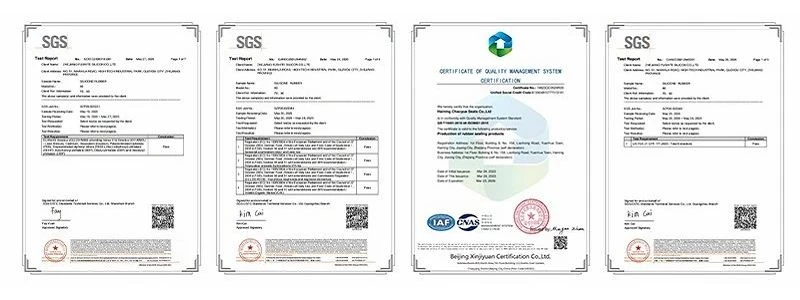
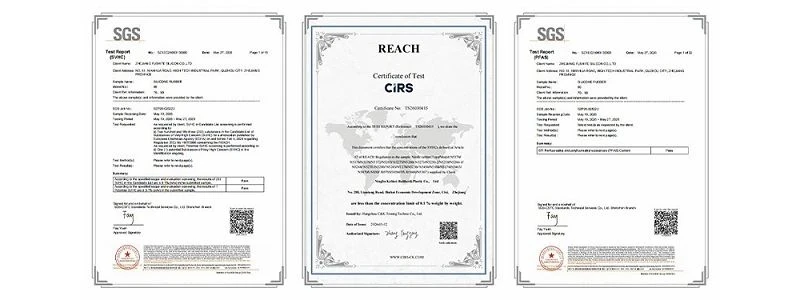
Our Certifications
FAQ
As one of the most professional polyurethane o ring manufacturers and suppliers in China, we offer a wide range of products with superior quality. Please feel free to wholesale high quality polyurethane o ring made in China here from our factory. Also, custom service is available.
Abrasion Resistant Polyurethane O Ring, Urethane O Rings, Molded Polyurethane O rings