


Introduction
An NBR O-Ring is a molded elastomeric sealing element manufactured from copolymer butadiene and acrylonitrile. It functions by creating a physical barrier between two or more mating surfaces, preventing the passage of liquids or gases under static and dynamic operational conditions.Nitrile rubber achieves its primary mechanical utility from its acrylonitrile (ACN) content, which typically ranges from 30% to 42% in standard industrial grades.

Standard O-Rings (AS568 / Metric Sizes): Toroidal sealing rings produced in standard cross-sections and inner diameters following AS568, ISO 3601, JIS B 2401, and GB/T 3452.1 dimensional standards.
X-Ring / Quad-Ring Profiles: Four-lobed elastomeric seals providing dual-sealing contact points. This geometry reduces friction and prevents spiral failure in reciprocating dynamic applications compared to standard round cross-sections.
Custom Molded Cord and Spliced Rings: Extruded nitrile cords vulcanized or bonded into specific ring diameters for large-scale housings where standard compression molds are uneconomical.
Backed-Up O-Rings: NBR rings paired with hard plastic or PTFE anti-extrusion rings, deployed in high-pressure hydraulic circuits to prevent seal extrusion into clearance gaps.
Polymer Base: Acrylonitrile-Butadiene Rubber (NBR), standard sulfur-cured or peroxide-cured variants.
Hardness Range: 50, 60, 70, 80, and 90 Shore A. Standard stock components are molded at 70 Shore A to balance elasticity and extrusion resistance.
Temperature Range: Standard compounds operate continuously from -30 degrees C to +100 degrees C, with short-term exposure limits up to +120 degrees C depending on aniline point of contacting oils. Low-temperature specialized formulations reach -40 degrees C.
Fluid Resistance: Excellent resistance to petroleum oils, crude oil, gasoline, propane, mineral oil, silicone oils, and dilute acids. Unsuitable for polar solvents, ketones, esters, brake fluids with glycol base, and ozone-rich environments.

Technical Specifications
|
Property |
Test Method |
Typical Specification Value |
|
Polymer Content (ACN) |
ASTM D297 |
32% to 38% (Medium-High Nitrile) |
|
Hardness |
ASTM D2240 |
70 ± 5 Shore A |
|
Tensile Strength |
ASTM D412 |
Minimum 14.5 MPa |
|
Ultimate Elongation |
ASTM D412 |
Minimum 300% |
|
Compression Set |
ASTM D395 (22 h at 100 °C) |
Maximum 25% |
|
Density |
ASTM D297 |
1.20 ± 0.05 g/cm3 |
|
Dimensional Tolerance |
ISO 3601-1 / RMA Class A2 |
Precision molded, ±0.05 mm to ±0.15 mm |
Applications
Hydraulic and Pneumatic Cylinders
Sealing pistons, rods, and cylinder end caps against high-pressure hydraulic oil and compressed air.
Automotive Fuel Systems
Fuel pumps, carburetor connections, and oil pans exposed to diesel, gasoline, and engine lubricants.
Industrial Valves and Pumps
Ball valves, gate valves, centrifugal pump housings, and pipe coupling interfaces.
Gearboxes and Compressors
Rotary shaft stationary covers and internal oil galleries operating under continuous splash lubrication.

Determine Groove Dimensions: Calculate the gland fill, stretch, and squeeze ratio. Standard squeeze ranges between 15 percent and 30 percent of the cross-section diameter (W).
Verify Chemical Compatibility: Cross-reference the working fluid with nitrile compound resistance tables. Ensure the ACN content matches the aromatic hydrocarbon concentration in the oil.
Assess Temperature Limits: Confirm that continuous operating temperatures do not exceed +100 degrees C to prevent polymer embrittlement and permanent compression set.
Evaluate Pressure versus Clearance: For operating pressures exceeding 10 MPa (100 bar), check the radial clearance gap to determine if anti-extrusion back-up rings are necessary.
Production runs utilize direct compression molding and injection molding technology utilizing automated vacuum presses. Compound batch mixing is managed via internal batch mixers with computerized dispersion monitoring to ensure uniform cross-linking density.
Quality inspection protocols include:
- Dimensional Sorting: Automated optical sorting machines inspect inner diameter, outer diameter, and cross-section thickness to verify compliance with ISO 3601 tolerances.
- Visual Defect Screening: Inspection for flash, parting line mismatch, flow marks, and micro-voids.
- Physical Testing: Random sampling per production lot for tensile strength, elongation at break, specific gravity, and Shore A hardness verification.
- Compression Set Testing: Laboratory thermal aging tests to measure elastomer recovery after sustained mechanical deflection.

Custom and OEM Manufacturing
Compound Customization
Formulation adjustments for low-temperature flexibility, high abrasion resistance, or specific regulatory compliance (e.g., FDA-compliant or NSF-certified grades for specific liquid handling).
Non-Standard Tooling
Rapid mold fabrication for specialized inner diameters, non-circular cross-sections, or proprietary groove configurations based on CAD step files or technical drawings.
Part Identification
Custom packaging, bulk barcoding, and laser-marked dispensing kits for assembly line integration.
Packaging and Delivery
Packaging prevents environmental degradation and physical distortion during international shipping:

Primary Packaging
Vacuum-sealed polyethylene bags treated with anti-stick agents to prevent parts from adhering under ambient humidity.

Secondary Packaging
Heavy-duty corrugated master cartons lined with moisture barrier films. Each carton displays batch numbers, material compound codes, dimension specs, and manufacturing dates.

Storage Recommendations
Store in a cool, dry environment away from direct sunlight, ultraviolet sources, and ozone-generating electrical equipment to maximize shelf life.
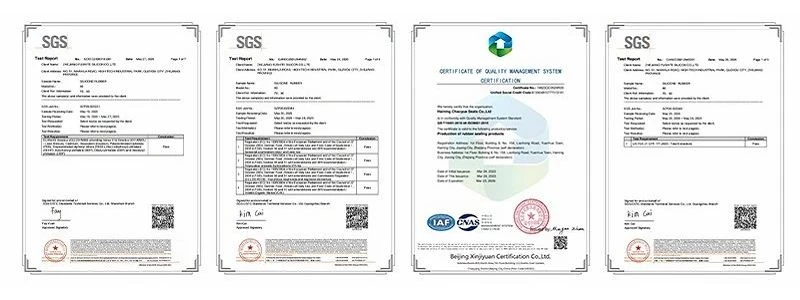
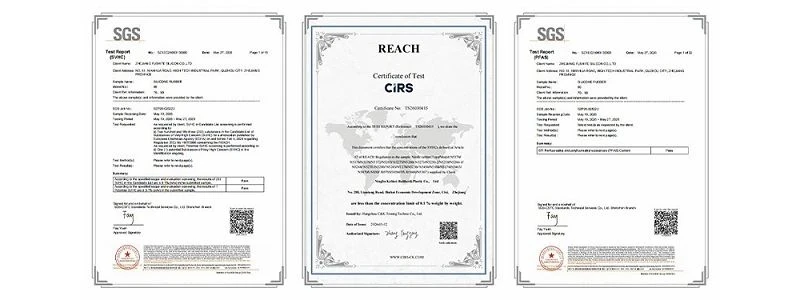
Our Certifications
FAQ
As one of the most professional nbr o ring manufacturers and suppliers in China, we offer a wide range of products with superior quality. Please feel free to wholesale high quality nbr o ring made in China here from our factory. Also, custom service is available.
nbr nitrile o rings, nitrile o rings, Fuel Resistant NBR ORing