

EPDM O Ring
EPDM O Ring
Manufacturer & Supplier
Chaoyue manufactures standard and custom EPDM O Rings for water, steam, automotive and industrial sealing applications. EPDM material provides excellent resistance to ozone, weathering, moisture and chemical environments, supporting stable sealing performance in outdoor and demanding applications.


Introduction
EPDM O-rings provide reliable static and dynamic fluid sealing across automated fluid lines, automotive systems, and water treatment equipment. Formulated with saturated polymer backbones, these elastomer seals resist ozone, UV exposure, steam, and polar chemical media. Procurement engineers and system designers require seals manufactured to precise cross-sectional tolerances and stable compound formulations to ensure long-term joint integrity without degradation or fluid permeation.
Product Types
Standard AS568 O-Rings
Manufactured to Aerospace Standard AS568 sizes for universal industrial fittings, hydraulic manifolds, and fluid couplings.
Metric O-Rings
Precision-molded to international metric dimensions (Inner Diameter x Cross Section) complying with ISO 3601 and DIN standards.
Custom Molded Profiles and Cord
Specialized non-standard dimensions, spliced rings, and custom cross-sections produced via precision compression or injection molding tooling.

EPDM Compound Formulations: Sulfur-cured and peroxide-cured options available. Peroxide curing delivers superior heat resistance, lower compression set, and enhanced resistance to aging.
Hardness Range: Standard durometers available from 50 to 90 Shore A, balanced for required sealing pressure and stretch during installation.
Temperature Envelope: Standard continuous operating range from -50 degrees C to +125 degrees C, with high-temperature peroxide grades withstanding up to +150 degrees C (and short-term spikes to +175 degrees C in steam or hot water).
Chemical Compatibility: Excellent resistance to water, steam, ozone, aging, weathering, dilute acids, alkalis, silicone oils, and glycol-based brake fluids. Incompatible with petroleum-based oils, greases, and fuels (which cause rapid swelling and degradation).
Technical Specifications
|
Parameter |
Specification / Standard |
Details |
|
Dimensional Standards |
AS568, ISO 3601, JIS B2401, DIN 3771 |
Standard sizes or custom drawing specifications |
|
Hardness Tolerance |
±5 Shore A |
Verified according to ASTM D2240 |
|
Tensile Strength |
Minimum 10 MPa |
Verified according to ASTM D412 |
|
Ultimate Elongation |
Minimum 250% |
Verified according to ASTM D412 |
|
Compression Set |
Below 25% |
22 hours at 100 °C; ASTM D395 Method B |
|
FDA Compliance |
FDA 21 CFR 177.2600 |
Available for suitable material formulations |
|
Drinking Water Compliance |
WRAS / NSF 61 |
Available for specified compounds |
|
Medical Material Compliance |
USP Class VI |
Available for suitable formulations |
|
Chemical / Environmental Compliance |
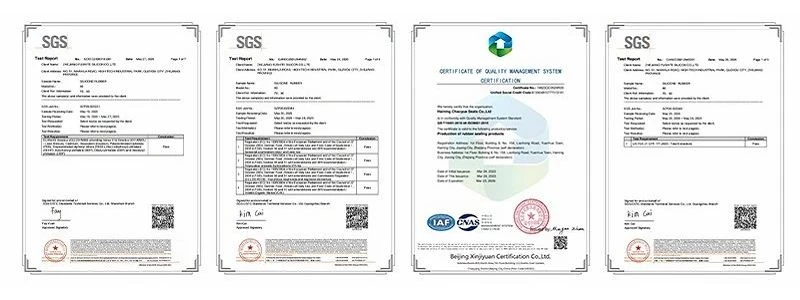
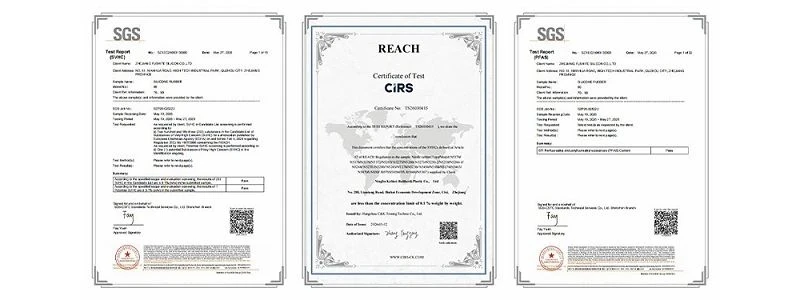
RoHS / REACH |
Available according to material formulation and application |
Applications
Automotive Systems
Engine cooling circuits, thermostat housings, water pumps, heater cores, and glycol-based brake fluid systems.
Water Treatment and Plumbing
Reverse osmosis (RO) filter housings, municipal water valves, pump housings, and pressure regulator connections.
HVAC and Refrigeration
Water chillers, steam distribution lines, and non-mineral-oil refrigerant equipment connectors.
Industrial Equipment
Pneumatic cylinders, chemical processing dosing pumps, and agricultural sprayers handling polar solvents and water-based chemicals.
Verify Fluid Compatibility: Confirm that the working media is polar (water, steam, glycols, organic acids) and avoid petroleum oils, mineral greases, or non-polar fuels which attack EPDM polymer chains.
Determine Operating Temperature Range: Check peak and continuous operating temperatures to select between standard sulfur-cured compounds (up to 125 degrees C) and peroxide-cured compounds (up to 150 degrees C).
Calculate Squeeze and Groove Dimensions: Match the O-ring cross-section and inner diameter to the gland fill percentage (typically 15 to 30 percent squeeze) to ensure effective sealing without over-stressing.
Select Durometer (Shore A): Choose 70 Shore A as the universal standard; select softer 50 to 60 durometer for low-pressure sealing with limited bolt load, or harder 80 to 90 durometer for high-pressure extrusion resistance.

Manufacturing and Quality Control
Automated Batch Compounding: Internal mixers and automated weighing systems guarantee uniform carbon black dispersion, filler distribution, and raw polymer consistency across every batch.
Precision Compression and Injection Molding: Multi-cavity molds mounted on high-tonnage hydraulic presses maintain precise cavity temperatures and curing cycles to eliminate voids and under-cured cores.
Cryogenic Deflashing: Automated cryogenic deburring removes flash cleanly from parting lines without damaging the outer sealing perimeter or altering cross-sectional dimensions.
Optical and Dimensional Sorting: Automated optical vision inspection systems scan 100 percent of production runs to detect flash, pits, oversized dimensions, or out-of-round tolerances.
Custom and OEM Manufacturing
Custom Compound Formulation
Tailored rubber compounding to optimize specific tensile strength, tear resistance, low-temperature flexibility, or specific regulatory compliances.
Rapid Tooling Fabrication
In-house CNC tool rooms manufacture custom mold cavities within tight lead times for non-standard O-ring dimensions or specialized cross-sections.
Post-Curing Services
Secondary oven post-curing cycles applied to eliminate residual volatile organic compounds (VOCs) for sensitive food-grade or high-purity applications.
Protective Packaging: O-rings packaged in anti-static, moisture-barrier polyethylene bags sealed in corrugated outer cartons to prevent dust contamination and deformation during transit.
Lot Identification: Each package clearly labeled with compound batch number, part number, AS568 or metric size, cure date, and quantity for complete supply chain traceability.
Shipping Documentation: Commercial invoices, packing lists, Certificate of Conformance (CoC), and material test reports provided with each dispatch.
Our Certifications
FAQ
As one of the most professional epdm o ring manufacturers and suppliers in China, we offer a wide range of products with superior quality. Please feel free to wholesale high quality epdm o ring made in China here from our factory. Also, custom service is available.
epdm o ring, Heat Resistant EPDM Rubber O Ring, metric epdm o rings