

HNBR O Ring
HNBR O Ring Manufacturer & Supplier
We manufactures standard and custom HNBR O rings for high-performance sealing applications. Available in AS568, Metric and custom sizes, HNBR O rings provide excellent resistance to heat, oil, ozone and mechanical wear for automotive, hydraulic, oil & gas and industrial equipment.


Introduction
Industrial dynamic systems working under mechanical stress, oil exposure, and elevated temperatures require high-strength sealing elements. HNBR (Hydrogenated Nitrile Butadiene Rubber) O-rings bridge the gap between standard NBR and high-cost fluoroelastomers. Selective hydrogenation of the NBR polymer backbone increases resistance to heat, ozone, and chemical degradation while maintaining high mechanical strength and wear resistance.

Standard AS568 and Metric O-Rings: Molded to international dimension standards including AS568, ISO 3601, and JIS B 2401 for standard gland housing fits.
Automotive A/C Grade O-Rings: Green and black HNBR seals formulated specifically for R134a and R1234yf refrigerants combined with PAG and POE synthetic lubricants.
High-Saturation Oilfield Seals: Fully saturated HNBR rings (saturation level greater than 99 percent) built for downhole tools exposed to sour crude oil, amine corrosion inhibitors, and hydrogen sulfide (H2S).
Low-Temperature HNBR Seals: Modified polymer grades formulated to retain flexibility down to -40°C while maintaining fuel and oil resistance.
Custom Molded Profiles: Non-standard cross-sections, quad-rings, and rectangular profile seals fabricated according to customer CAD drawings and tolerance requirements.
Materials and Performance
ACN Content (30% to 44%)
Higher ACN content increases resistance to petroleum fuels and mineral oils but raises the glass transition temperature, reducing low-temperature flexibility. Lower ACN content improves cold-temperature flexibility down to -40°C with moderate oil resistance.
Polymer Saturation Level
Partially saturated grades (95% to 98%) provide high tensile strength and dynamic wear resistance. Fully saturated grades (greater than 99 percent) provide maximum heat, ozone, and chemical aging resistance under severe environmental exposure.

Material Performance Summary
|
Parameter and Grade |
Low ACN Grade |
Medium ACN Grade |
High ACN Grade |
Fully Saturated Grade |
|
ACN Content |
30% to 34% |
35% to 39% |
40% to 44% |
36% to 39% |
|
Saturation Level |
95% to 98% |
95% to 98% |
95% to 98% |
> 99.0% |
|
Operating Temp Range |
-40°C to +140°C |
-30°C to +150°C |
-20°C to +150°C |
-25°C to +160°C |
|
Oil and Fuel Swell |
Moderate |
Low |
Very Low |
Low |
|
Ozone and H2S Resistance |
Good |
Good |
Good |
Excellent |
Technical Specifications
|
Property |
Typical Specification |
Test Method / Condition |
|
Hardness Range |
60 to 90 Shore A, ±5 tolerance |
ASTM D2240 |
|
Tensile Strength |
20.0 to 28.0 MPa minimum |
ASTM D412 |
|
Elongation at Break |
150% to 400% |
Based on compound filler loading and durometer |
|
Compression Set |
15% to 25% maximum |
ASTM D395 Method B; 150 °C for 70 h |
|
Ozone Resistance |
No cracks after 70 h exposure |
40 °C, 100 pphm ozone concentration |
|
Specific Gravity |
1.20 to 1.35 g/cm3 |
— |
|
Dimensional Tolerances |
ISO 3601-1 Grade S (Precision) / RMA Class A2 |
Precision molding limits |
Applications

Automotive Engine and HVAC
Air conditioning compressor shaft seals, timing belt drive seals, fuel rail O-rings, and power steering pump gaskets.
Oil and Gas Field Equipment
Downhole logging tools, packers, blowout preventers, and mud pump valve seals exposed to sour gas (H2S) up to 150°C.

Hydraulic and Fluid Power
High-pressure hydraulic cylinder rod seals, dynamic piston rings, and industrial gear pump seals subjected to heavy impulse pressure.
Refrigeration Systems
HVAC valves and connector fittings using eco-friendly refrigerants and synthetic compressor lubricants.
Evaluate Working Fluids: Identify the fluid medium contacting the seal. Use high ACN grades for gasoline and diesel fuels; use medium ACN grades for mineral oils and synthetic lubricants.
Determine Low-Temperature Limits: Check minimum system startup temperatures. If system startup drops below -30°C, select a low-temperature HNBR grade to avoid seal hardening and fluid bypass.
Check Operating Pressure
Choose 70 Shore A for static pressures below 10 MPa. For dynamic or high-pressure systems exceeding 15 MPa, specify 80 or 90 Shore A hardness to prevent gap extrusion without backup rings.
Confirm Chemical Saturation Needs
If the system contains ozone, steam, or sour gas (H2S), select fully saturated HNBR (saturation level > 99 percent) to prevent polymer backbone degradation.
Review Gland Design
Ensure the housing groove dimensions provide recommended squeeze levels (15% to 25% for static, 10% to 20% for dynamic) and cross-sectional compression limits.
Manufacturing and Quality Control
Compound Batching
Raw HNBR polymers, carbon black fillers, and peroxide curing agents are mixed in internal Banbury mixers with computerized weight monitoring.
01
Precision Molding
Vacuum compression and injection molding machinery prevent air entrapment and yield uniform density across complex geometries.
02
Post-Curing Treatment
Hot-air post-curing ovens complete the vulcanization process, driving off volatile compounds and stabilizing compression set properties.
03
Automated Optical Inspection
High-speed vision inspection machines screen finished O-rings for surface defects, flash, inner diameter errors, and cross-section variance.
04
Laboratory Verification
In-house testing verifies hardness, tensile strength, tear strength, and fluid immersion weight change per ASTM D471 protocols before dispatch.
05
We provide custom compounding and OEM component manufacturing based on client specifications, technical drawings, or physical samples.
Custom Formulations: Adjustment of durometer hardness, low-temperature capability, or chemical resistance to match specific OEM engineering standards.
Color Identification: Production of standard black, saturated green, blue, or custom color-coded compounds for easy assembly line identification.
Tooling Fabrication: CNC machining of mold cavity plates allows sample development within 7 to 10 business days.
Surface Coating: Application of PTFE powder, dry-film lubricant, or silicone oil coatings to reduce insertion friction during automated assembly.
Packaging and Delivery
Packaging Protocol
O-rings are packed in sealed, light-resistant poly bags sorted by size and lot code to prevent light degradation and sticking. Bag labels list part numbers, dimensions, material grade, batch ID, and cure dates.
Export Shipping
Bags are packed in heavy-duty double-wall corrugated boxes secured on fumigation-free wooden pallets with protective stretch wrap. Shipments support air express, ocean freight, or land transport arrangements.
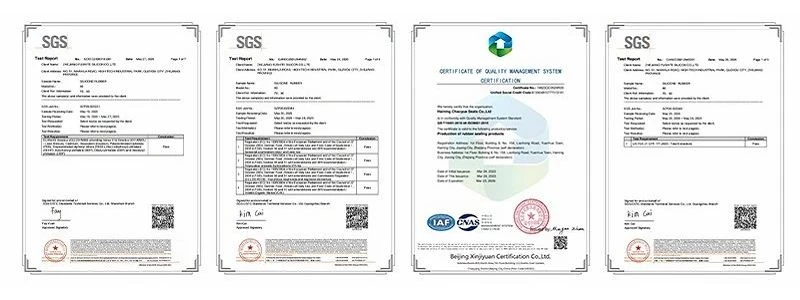
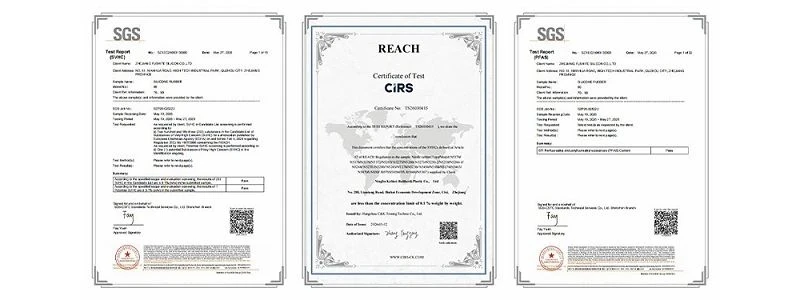
Our Certifications
FAQ
As one of the most professional hnbr o ring manufacturers and suppliers in China, we offer a wide range of products with superior quality. Please feel free to wholesale high quality hnbr o ring made in China here from our factory. Also, custom service is available.
Aging Resistance HNBR O Ring, hydrogenated nitrile o ring, Standard HNBR Oring