

Rubber Caps
Custom Rubber Caps Manufacturer for Industrial Solutions
Chaoyue specializes in the manufacturing of custom rubber caps for industrial protection and sealing applications. Based on customer drawings, samples, or application requirements, we provide rubber caps with customized materials, structures, and performance specifications.
From material selection and mold development to production inspection, Chaoyue supports OEM projects with flexible manufacturing capabilities for different industries and component requirements.


Introduction
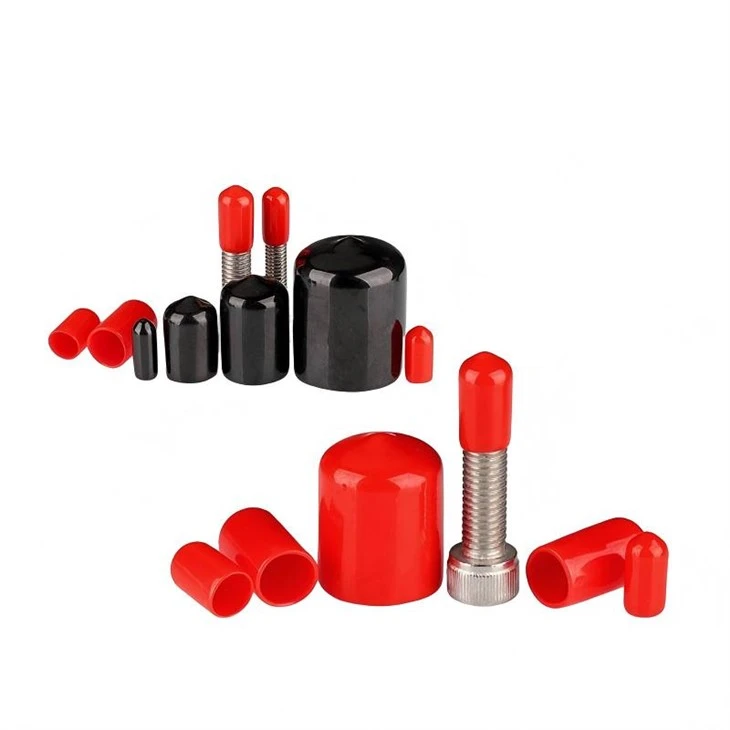
A Rubber Cap is a flexible elastomeric protective cover molded to fit over cylindrical studs, pipe ends, tubes, and threaded components. It functions as a mechanical shield against moisture, dust, chemical ingress, paint spatter, and physical impact during manufacturing, transit, and storage cycles.

Standard Round End Caps: Cylindrical caps with flat or rounded closed ends, utilized for protecting threaded studs, bolt ends, and pipe terminations from thread damage and corrosion.
High-Temperature Masking Caps: Formulated from specialized silicone compounds to withstand powder coating and e-coating thermal cycles up to 300 degrees C without melting, hardening, or leaving chemical residues.
Flanged Pull-Tab Caps: Caps featuring an integrated pull ring or extended lip, enabling rapid manual installation and removal on high-volume production masking lines.
Tapered and Rectangular Protectors: Specialized variants matching non-round structural profiles, square tubing ends, and electrical harness terminations.
EPDM (Ethylene Propylene Diene Monomer): Standard compound for general industrial protection. Resists weathering, ozone, water, and dilute acids. Operating range: -40 degrees C to +120 degrees C.
Silicone Rubber: High-purity elastomer for extreme thermal exposure and masking applications. Resists high baking temperatures and chemical solvents. Operating range: -60 degrees C to +250 degrees C (short-term to +300 degrees C).
Neoprene (CR): Provides balanced resistance to petroleum-based oils, grease, and mechanical wear. Operating range: -30 degrees C to +100 degrees C.
PVC / Plasticized Vinyl: Economical alternative for light-duty dust protection and low-temperature storage. Operating range: -20 degrees C to +70 degrees C.
Technical Specifications
|
Property |
Test Method |
Typical Specification Value |
|
Polymer Base |
ASTM D297 |
EPDM / Silicone / Neoprene / PVC |
|
Hardness |
ASTM D2240 |
50 ± 5 Shore A |
|
Tensile Strength |
ASTM D412 |
Minimum 9.0 MPa (EPDM) / Minimum 7.0 MPa (Silicone) |
|
Ultimate Elongation |
ASTM D412 |
Minimum 300% |
|
Tear Strength |
ASTM D624 |
Minimum 25 kN/m |
|
Dimensional Tolerance |
RMA Class A2 |
Precision molded, ±0.10 mm to ±0.30 mm |
|
Continuous Temperature Limit |
Internal Lab Test |
Up to +120 °C (EPDM) / +250 °C (Silicone) |

Powder Coating and Painting: Masking threaded studs, shafts, and ports to prevent paint, grit, and chemical ingress during surface finishing processes.
Hydraulic and Pneumatic Shipping: Sealing open tube ends, flared fittings, and hose assemblies against moisture and debris contamination during international ocean freight.
Automotive Chassis Assembly: Protecting exposed wheel spindles, brake line fittings, and engine studs during vehicle assembly and body shop transit.
Electrical and Electronics: Insulating live terminal pins, busbars, and connector ends against accidental short circuits and dust accumulation.
How to Select Rubber Caps
Calculate Interference Fit
Ensure the inner diameter (ID) of the rubber cap is 1 percent to 5 percent smaller than the outer diameter of the mating stud or tube to guarantee a secure friction grip. Do not oversize.
Verify Thermal Exposure
Match the compound to the operational environment. Standard EPDM suits ambient shipping, while powder coating baking lines require high-purity silicone rated above +200 degrees C.
Assess Chemical Contact
Check if the cap will encounter cutting fluids, hydraulic oils, or aggressive solvents during processing, and select compound variants with appropriate chemical resistance.
Determine Removal Frequency
For production masking operations where caps are removed manually hundreds of times per shift, select flanged or tabbed profiles to reduce operator fatigue.
Manufacturing and Quality Control
Production relies on high-precision compression molding and automated liquid injection molding machines utilizing multi-cavity hardened steel tooling. Raw polymer compounds undergo internal dispersion mixing with computerized batch controllers to guarantee uniform vulcanization parameters.
Quality inspection protocols include:
Dimensional Verification
Optical comparators and digital gauge checks on inner diameter, wall thickness, and total length against engineering drawings.

Elongation and Tensile Testing
Lot sampling subjected to ASTM D412 tensile testing to verify rubber tear resistance and stretch recovery.
Flash and Defect Screening
Automated and manual screening for parting line flash, short shots, air entrapment, and wall thickness uniformity.

Thermal Aging Verification
Silicone masking samples undergo simulated baking cycle tests to confirm zero compound melting or residue transfer.
Custom and OEM Manufacturing

Custom Geometry Tooling
Rapid tool fabrication for non-standard diameters, extended lengths, internal ribbing, or specialized pull-tab configurations based on 2D/3D CAD data.

Compound Color-Coding
Pigment blending to produce specific colors (e.g., red, black, blue, yellow) for visual assembly identification, wire harness coding, or product grade separation.

Specialized Packaging
Bulk binning, anti-static bagging, or kit-packaging structured for automated pick-and-place assembly lines.
Packaging and Delivery
Packaging methods prevent physical deformation and environmental contamination during transit:
Primary Packaging
Sealed heavy-duty polyethylene bags preventing moisture absorption and dust accumulation during storage.
Secondary Packaging
Double-walled corrugated master cartons reinforced with moisture barrier linings to prevent crushing during international transport.
Storage Guidance
Store in clean, dry environments away from direct ultraviolet light, ozone sources, and extreme heat to maintain elastomer shelf life.
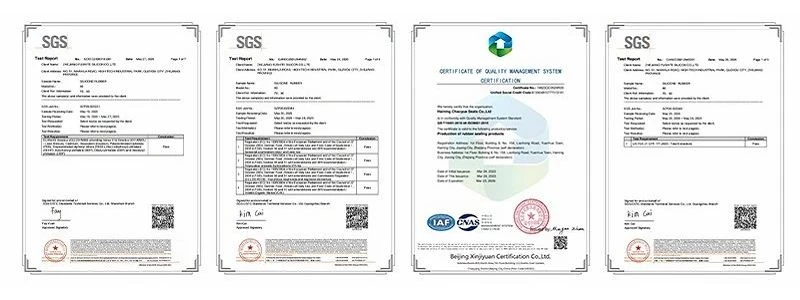
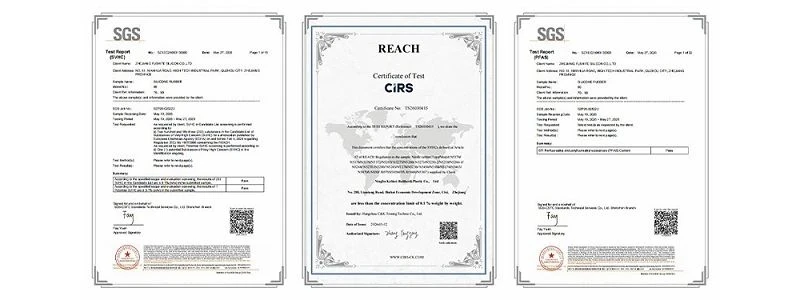
Our Certifications
FAQ
As one of the most professional rubber caps manufacturers and suppliers in China, we offer a wide range of products with superior quality. Please feel free to wholesale high quality rubber caps made in China here from our factory. Also, custom service is available.
small rubber caps, round rubber caps, tubular rubber cap