

Silicone O Ring

Custom Silicone O Ring Manufacturer
Silicone O rings are circular elastomer sealing rings with a round cross-section, designed to seal the gap between mating components and prevent the passage of liquids, gases, or contaminants. Silicone rubber provides flexibility, temperature resistance, and good resistance to moisture and weathering, making silicone O rings suitable for sealing applications exposed to temperature variations and demanding environments. Chaoyue manufactures standard and custom silicone O rings in different sizes, cross-sections, hardness grades, and colors according to customer drawings, samples, or application requirements.
Standard & Custom Sizes
Multiple Hardness Options
Drawing & Sample Based Production
OEM Manufacturing


Introduction
Silicone O-rings are elastomeric toroidal sealing elements utilized across fluid power, thermal management, and fluid transport systems. Formulated from cross-linked polysiloxane networks, these components retain physical elasticity across an operational temperature range from -60C to +200C, with specific high-temperature compounds rated up to +250C.
Unlike organic general-purpose elastomers, silicone exhibits intrinsic resistance to UV radiation, ozone, and atmospheric oxidation. These characteristics render silicone O-rings standard in static and slow dynamic sealing architectures within food processing, medical devices, water filtration, and electrical enclosures.

Standard Inch and Metric O-Rings (AS568, ISO 3601, JIS B2401): Manufactured to established dimensional series, covering fractional inch sizes and metric cross-sections for standard gland designs.
Custom Molded and Non-Standard O-Rings: Fabricated via custom compression molding or injection molding tooling to match non-standard groove dimensions or intricate equipment housings.
Vulkanized and Endless Joined O-Rings: Produced by cutting extrusion cord to specified lengths and vulcanizing the joints end-to-end; deployed in large-diameter static sealing flanges where tooling costs for single-piece molds are prohibitive.
Materials and Performance
Silicone elastomer performance is governed by polymer base and vulcanization chemistry, covering peroxide-cured and platinum-cured systems.
Durometer Range: 30 to 80 Shore A. Lower durometer compounds (30 to 50 Shore A) offer high conformability under low closure force; higher durometer compounds (70 to 80 Shore A) resist extrusion at elevated pressures.
Temperature Range: Standard compounds operate from -60C to +200C. Special phenyl-silicone formulations extend low-temperature flexibility down to -100C, while heat-stabilized grades withstand intermittent peaks at +250C.
Compression Set: Exhibits moderate to high resilience, though standard silicone displays higher compression set values compared to FKM or EPDM under prolonged high-load static deflection. Post-curing processes reduce volatile residue and lower compression set figures.
Chemical Compatibility:
- Compatible With: Water, low-pressure steam, dilute acids, alkalis, salt solutions, ozone, UV, and animal or vegetable oils.
- Incompatible With: Concentrated acids and alkalis, steam above 120C (causes reversion), aromatic hydrocarbons (benzene, toluene), and petroleum-based fuels and low-molecular-weight silicone oils.
Technical Specifications
|
Parameter |
Specification and Range |
Test Standard |
|
Polymer Base |
VMQ (Vinyl Methyl Polysiloxane) |
ASTM D1418 |
|
Hardness |
30 to 80 Shore A (plus or minus 5 tolerance) |
ASTM D2240 |
|
Tensile Strength |
5.0 to 9.5 MPa minimum |
ASTM D412 |
|
Elongation at Break |
300 percent to 600 percent |
ASTM D412 |
|
Compression Set |
20 percent to 40 percent (22 hrs at 175C) |
ASTM D395 Method B |
|
Specific Gravity |
1.15 to 1.35 g/cm3 (varies by filler and color) |
ASTM D297 |
|
Regulatory Compliance |
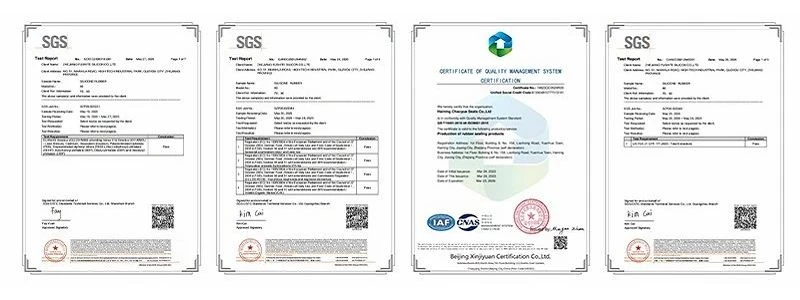
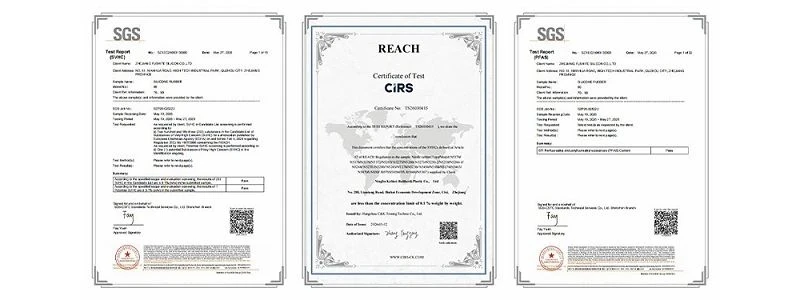
FDA 21 CFR 177.2600, USP Class VI, RoHS, REACH |
FDA, USP, EU Directives |
Food and Beverage Processing: Sealing points in dairy homogenizers, brewing manifolds, bottling machinery, and clean-in-place (CIP) fluid transfer lines.
Medical and Laboratory Equipment: Fluid manifolds in diagnostic analyzers, peristaltic pump tubing connectors, and autoclave chamber seals.
HVAC and Water Treatment: Potable water distribution valves, reverse osmosis filtration housings, and solar thermal heating loops.
Automotive and Commercial Vehicles: Turbocharger air-intake ducts, sensor O-ring seals, and electrical control unit (ECU) moisture barriers.
Electronics and Lighting: Weatherproof sealing gaskets for outdoor LED architectural fixtures and telecommunication outdoor enclosures.

How to Select Silicone O-Rings

Determine Dimensional Envelope: Calculate gland fill, squeeze percentage (recommended 15 percent to 30 percent for static seals), and stretch limits (ID stretch during installation should not exceed 5 percent to 7 percent).
Verify Chemical Environment: Cross-reference operational fluid media, concentration, and working temperature to confirm VMQ suitability, paying attention to steam exposure limits and fuel or solvent absence.
Select Curing System: Specify Platinum-Cured (Addition Cure) for medical, pharmaceutical, and high-purity food applications to eliminate peroxide breakdown byproducts and reduce extractables. Specify Peroxide-Cured for standard industrial environments where cost-efficiency is prioritized.
Establish Durometer: Choose 50 Shore A for low-pressure sealing on rough or uneven flange surfaces; choose 70 Shore A as the general-purpose baseline for balanced tear resistance and sealing force.
Review Regulatory Standards: Request FDA 177.2600 migration test reports or USP Class VI certificates if the parts contact consumable goods or biological media.
Manufacturing and Quality Control
Production lines employ computer-controlled internal mixers, precision extruders, and vacuum compression molding presses.
Batch Compounding: Raw VMQ gum, reinforcing silicas, cross-linking agents, and color pigments are metered and blended to exact rheological properties. Viscosity and cure characteristics are verified using moving die rheometers (MDR) prior to release.
Molding and Vulcanization: Hydraulic presses utilize multi-cavity precision ground molds with flash-free tooling geometries, ensuring minimal parting line mismatch and precise cross-sectional control.
Post-Curing Oven Treatment: Molded O-rings undergo secondary thermal treatment in forced-air circulating ovens at 200C for 4 to 8 hours to drive off volatile low-molecular-weight siloxanes and stabilize physical dimensions.
Dimensional Sorting: Automated optical inspection (AOI) systems evaluate inner diameter, cross-section diameter, flash defects, and surface anomalies at high speeds, supplemented by manual pull-testing and profile projector verification.

Custom and OEM Manufacturing
Tooling Development
Rapid prototype tooling (aluminum or soft steel) for sample verification within 7 to 10 days; high-cavity production tooling (hardened steel) for high-volume manufacturing.
Color Matching
Capability to compound custom pantone colors (translucent, white, red, blue, black, green) for assembly identification or aesthetic integration.
Private Label and Bulk Packaging
Custom bagging counts, barcoded labeling, and cleanroom bagging services available upon contract agreement.
Packaging and Delivery
Standard Packaging
O-rings are dusted with talc-free release agents (or supplied clean), sealed in heavy-duty polyethylene bags, and packed into reinforced corrugated outer cartons to prevent transit deformation.
Lot Traceability
Each master carton carries a barcode label displaying batch number, compound number, nominal dimensions, cure date, and inspection stamp for full supply chain traceability.
Shipping Terms
Flexible export options including FOB, CIF, or DDP via air freight and ocean container shipping.
Our Certifications
FAQ
As one of the most professional silicone o ring manufacturers and suppliers in China, we offer a wide range of products with superior quality. Please feel free to wholesale high quality silicone o ring made in China here from our factory. Also, custom service is available.
silicone o ring seal, stretchy silicone o rings, clear silicone o rings