

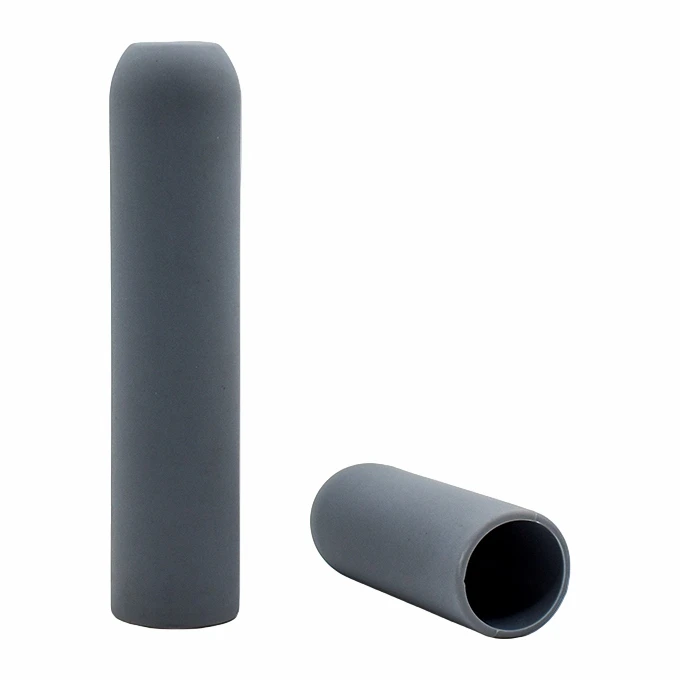
- Uniform Wall Structure
Rubber Caps feature a cylindrical wall design with a consistent diameter from the opening to the closed end. This structure provides a stable contact area when fitted over tubes, rods, and cylindrical components with regular outer dimensions.
- Consistent Component Coverage
The straight-side profile covers the exposed end section evenly, helping protect open tube ends from direct contact, dust, moisture, and handling damage. The cap height can be adjusted according to the length of the area requiring protection.
- Stable Push-On Fit
The inner wall of the cap contacts the component surface through elastic grip. Proper matching between the cap inner diameter and the component outer diameter helps maintain positioning after installation without additional fixing parts in standard applications.

Custom Dimensions & Wall Thickness Options

- Custom Diameter & Height
Chaoyue manufactures Rubber Caps according to component dimensions, drawings, or samples. The inner diameter and cap height can be adjusted to match different tube diameters and coverage requirements.
- Wall Thickness Adjustment
Rubber wall thickness can be customized according to protection requirements, installation space, and required flexibility. Different thickness designs can affect impact protection, grip force, and overall cap rigidity.
- Customized Profiles & Rubber Specifications
For non-standard applications, the cap shape, closed-end design, rubber hardness, and surface finish can be modified according to customer requirements. Custom development is available for specific component structures and assembly conditions.
FAQ
What is the difference between straight wall rubber caps and tapered rubber caps?
Straight Wall Rubber Caps have a consistent cylindrical wall structure with a uniform inner diameter, while tapered caps gradually change in diameter. Straight wall designs are commonly selected when the covered component has a consistent outer diameter and requires a stable fit along the side wall.
How do I select the correct size for a straight wall rubber cap?
The main selection factors include the outer diameter of the covered component, cap inner diameter, wall height, and installation requirements. The inner diameter should match the component size to achieve proper grip without excessive stretching.
Will rubber caps stay in place after installation?
The cap is held in position through elastic contact between the rubber inner surface and the covered component. Proper dimension matching between the cap and the component helps maintain retention during handling and normal operation.


