


- Hose Inner Diameter Matching - Confirm that the hose inner diameter matches the connector's specified barb dimensions. An undersized hose may be difficult to install, while an oversized hose may not develop sufficient contact with the barbed surface.
- Hose End Preparation - Check that each hose end has a clean, even cut and is free from cracks, cuts, swelling, or other damage that could affect the connection.
- Insertion Depth & Engagement - Push each hose onto its designated barbed port to the required seating position. Both connections should engage securely without leaving the hose partially seated.
- Clamp Positioning - Where clamps are required by the system design, select a compatible clamp size and position it according to the connector geometry. Avoid excessive tightening that could damage the hose or distort the rubber connector.
- Assembly Clearance - Check the installed connector for interference with adjacent components, sharp edges, and excessive hose bending. The hose routing should not place unnecessary tensile or lateral loads on the connection.

Dual Barbed Bypass Connector Quality Control
Barb & Port Dimension Inspection
Check the critical interface dimensions, including barb outside diameter, port length, barb profile, and spacing between the two ports. These features affect hose engagement and installation fit.
Overall Geometry Verification
Measure the connector's overall length, body dimensions, and other drawing-defined features to confirm that the part matches the specified installation layout.
Molded Surface Inspection
Examine the rubber body for cracks, tears, incomplete molding, excessive flash, and surface defects that could affect installation or the integrity of the component.
Material & Hardness Verification
Verify the specified EPDM compound and hardness against the approved material requirements. Coolant compatibility should be evaluated for the intended coolant formulation and operating temperature.
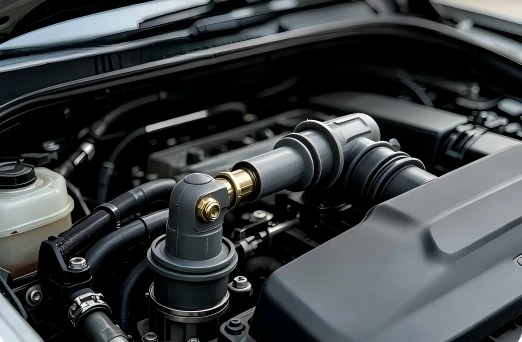
Automotive & Machinery Cooling Applications
- Engine Cooling Systems
Dual Barbed Bypass Connectors join compatible coolant hoses in engine cooling circuits. The dual-port design supports hose routing between designated connection points, with barb dimensions selected to match the hose inner diameter and specified operating conditions.
- Radiator & Heat Exchanger Connections
These connectors can be used in compatible radiator and heat exchanger hose assemblies where two flexible hose sections need to be joined. Connector spacing and overall dimensions should match the installation layout to avoid excessive hose bending or tension.
- Auxiliary Coolant Bypass Lines
In auxiliary cooling circuits, the connector links hoses along a designated bypass route to support coolant circulation between connected components. The internal passage, EPDM compound, operating temperature, and working pressure should be confirmed against the system requirements.
FAQ
What is the difference between a dual barbed bypass connector and a T-shaped hose connector?
A dual barbed connector generally has two barbed connection ends for joining two hose sections, while a T-shaped connector has three connection ports for branching or combining flow paths. The actual configuration should be confirmed against the product drawing.
Can a dual barbed bypass connector replace an original equipment part?
It may be used as a replacement when the connection geometry, material requirements, operating conditions, and functional design match the original component. Comparing the original part number or technical drawing helps confirm whether the replacement is suitable.
Does the connector affect coolant flow?
The connector's internal passage diameter and shape influence flow resistance. An undersized or poorly matched passage may restrict coolant flow, so the internal dimensions should be considered when the connector is selected for a specific cooling circuit.


