

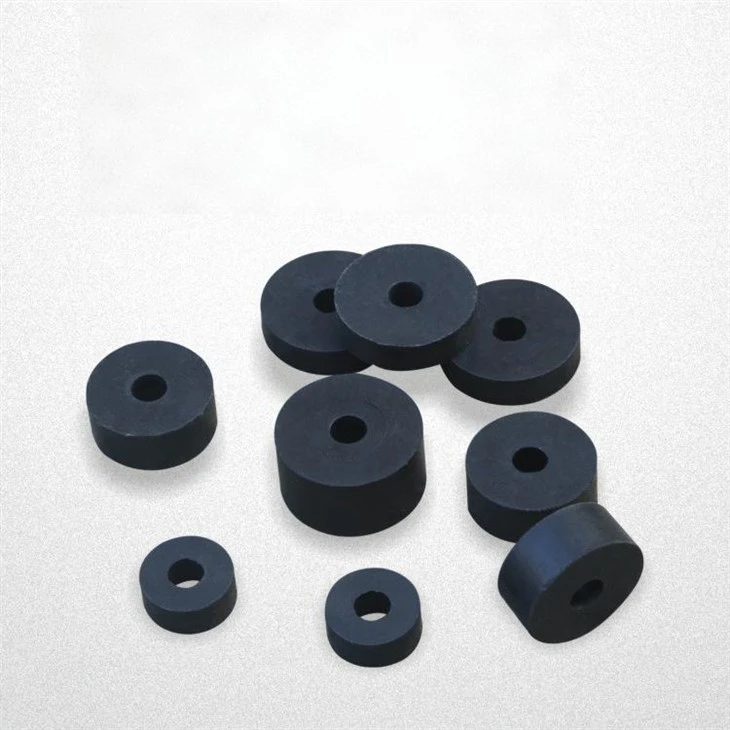
Rubber Material Selection & Mechanical Properties
The rubber material for door bumpers is selected according to the required hardness, contact frequency, environmental exposure, and mechanical properties. Different rubber compounds offer different levels of elasticity, abrasion resistance, weather resistance, and temperature adaptability. Chaoyue can evaluate material options based on the product design and intended operating conditions.
|
Rubber Material |
Key Properties |
Suitable Environments |
|---|---|---|
|
EPDM |
Good elasticity, ozone resistance, UV resistance, and weathering resistance |
Outdoor doors, exterior installations, and humid environments |
|
NBR |
Good resistance to mineral oils, lubricants, and petroleum-based fluids |
Industrial equipment doors and oil-exposed environments |
|
SBR |
Good abrasion resistance, resilience, and mechanical strength |
General-purpose door bumpers with frequent contact |
|
Silicone |
Good flexibility and performance across a wide temperature range |
Applications requiring temperature adaptability |
Door bumper geometry is developed according to the available installation space and the dimensions of the contacting components. The design of the rubber body, contact face, and molded details determines how the finished component fits into the intended assembly.
- Body Geometry: Product length, width, height, and overall profile can be developed according to the required installation dimensions. Different geometric configurations can be produced through customized mold designs.
- Contact Face Configuration: The contact surface can be designed with flat, rounded, curved, or other specified profiles. Its dimensions and contour should correspond to the shape of the contacting component.
- Section Thickness: Rubber thickness and cross-sectional dimensions are defined according to the product's structural requirements. Particular attention is given to transitions between thicker and thinner sections to maintain consistent molding quality.
- Molded Detail Design: Recesses, grooves, raised features, and other surface details can be incorporated into the design when required by the application. Their dimensions and positioning should be clearly defined in the product drawing.
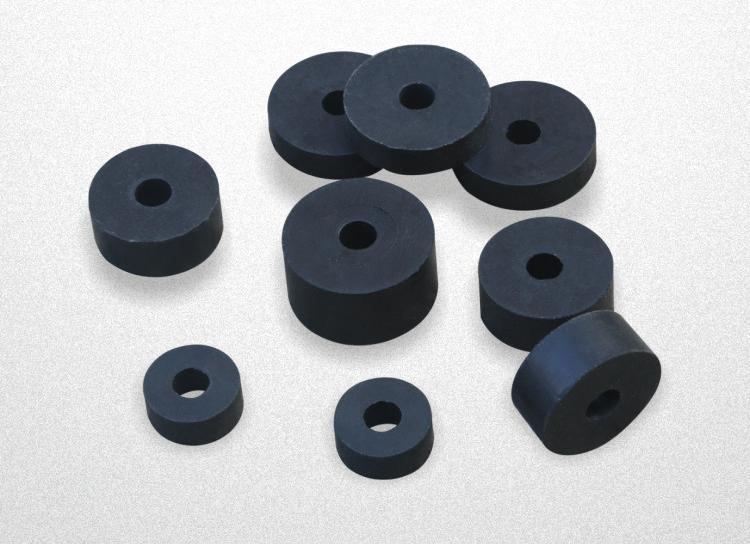
Molding Process & Quality Inspection
Mold Design & Preparation
Mold cavities are developed according to the product drawing, including the external contour, contact surface, and detailed geometric features. Mold preparation helps establish the dimensional requirements for production.
Rubber Compounding & Curing
The rubber compound is prepared according to the specified material formulation. Curing parameters are controlled to achieve the required molded shape and material properties.
Flash Trimming & Surface Inspection
Excess rubber around the mold parting line is removed after molding. Finished parts are checked for flash, surface cracks, incomplete filling, air bubbles, and other visible molding defects.
Dimensional & Hardness Inspection
Critical dimensions are checked against approved drawings, while rubber hardness is verified according to the specified Shore A requirement. Inspection criteria can be established for repeat production batches.
FAQ
Can you manufacture door bumpers based on an existing sample?
Yes. A physical sample can be used as a reference for product evaluation and development. Our team can review its dimensions, shape, and material requirements before confirming the manufacturing feasibility.
Can you support both prototype orders and mass production?
Prototype development can be arranged to verify the design and application requirements before mass production. Order quantities, sampling arrangements, and production schedules are evaluated according to the specific project.
Can you maintain consistent specifications for repeat orders?
Production specifications and approved samples can serve as references for repeat orders. Important requirements, such as dimensions, material grade, and hardness, should be confirmed before production to support consistency between batches.
Can door bumper products be supplied in different colors?
Color requirements can be reviewed according to the selected rubber compound and manufacturing process. Please provide a color reference or target specification when requesting a quotation so that feasibility can be evaluated.


