

Load-Bearing Capacity & Mechanical Performance
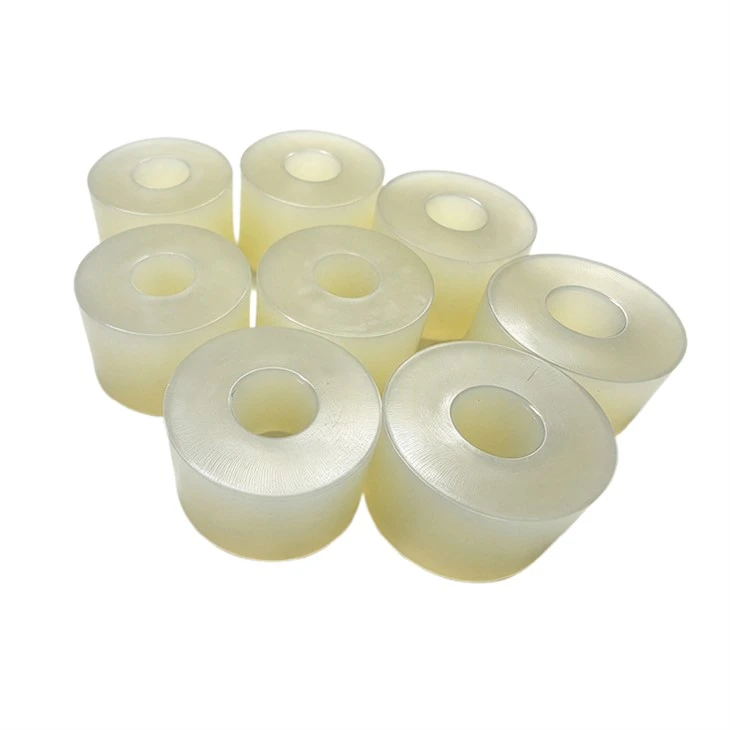
Polyurethane bushes are designed to support mechanical loads between connected components. Their load-bearing behavior depends on material hardness, contact area, wall thickness, and assembly conditions.
Compressive Strength
The polyurethane body withstands compressive forces generated during assembly and operation. Material grade and contact area influence its ability to support applied loads.
Radial Force Distribution
The cylindrical structure helps distribute radial forces across the contact area, reducing localized stress within the assembly.
Deformation Control
Inner diameter, outer diameter, and wall thickness affect how the bush deforms under pressure. Proper dimensional design helps maintain the required clearance and component positioning.
Cyclic Load Performance
For applications involving repeated loading, compression recovery and fatigue behavior should be considered to evaluate long-term mechanical suitability.
Abrasion Resistance & Wear Performance
Frictional Wear Resistance
Polyurethane resists material loss caused by repeated surface contact, helping maintain the working profile under suitable operating conditions.
Surface Damage Resistance
Appropriate polyurethane grades can withstand localized rubbing and mechanical contact, reducing the risk of premature surface deterioration.
Sliding Contact Performance
Movement speed, mating surface roughness, lubrication, and contact pressure affect friction behavior and should be considered during application evaluation.
Wear Condition Monitoring
Surface scoring, material loss, uneven wear, and changes in component clearance can indicate excessive friction or misalignment and help determine maintenance requirements.
Polyurethane Hardness & Material Selection
Polyurethane hardness is commonly measured on the Shore A scale and plays an important role in determining the mechanical response of a bush. The appropriate hardness depends on the required deformation, load conditions, contact behavior, and assembly design.
|
Hardness Range |
General Characteristics |
Selection Considerations |
|---|---|---|
|
60–70 Shore A |
Softer and more flexible, with greater deformation under comparable loads |
Applications requiring increased compliance and lower contact stiffness |
|
75–85 Shore A |
Balanced flexibility and resistance to deformation |
General mechanical assemblies with moderate support requirements |
|
90–95 Shore A |
Firmer structure with greater resistance to indentation |
Applications requiring higher stiffness and dimensional support |
|
95 Shore A and above |
Very firm polyurethane grades, depending on formulation |
Components requiring limited deformation under specified loading conditions |
Custom Polyurethane Bush Manufacturing
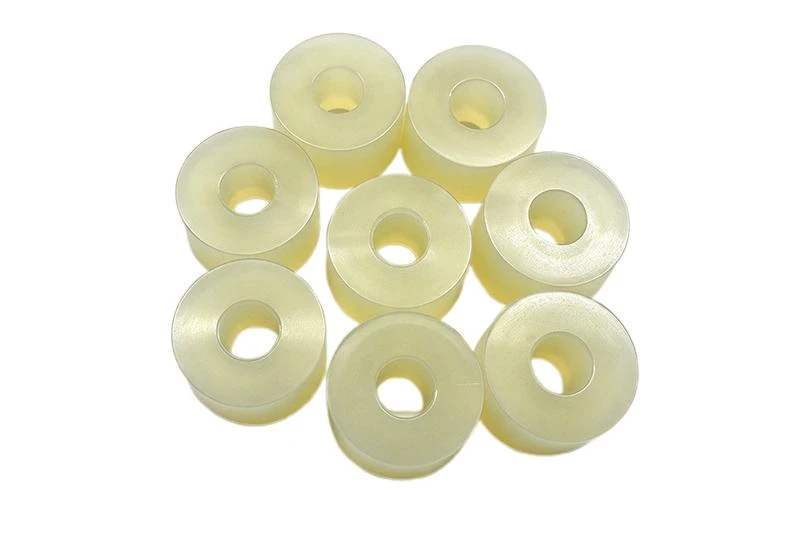
Chaoyue provides custom polyurethane bush development for equipment manufacturers and industrial component buyers requiring specific dimensions and mechanical configurations. Product specifications can be established from engineering drawings, physical samples, or assembly requirements.
- Dimensional & Geometric Customization - Inner diameter, outer diameter, overall length, wall thickness, stepped profiles, and flange configurations can be specified according to the assembly design.
- Hardness Specification - Shore A hardness can be discussed according to the required stiffness, deformation behavior, and mechanical loading conditions.
- Special Structural Features - Internal openings, external profiles, grooves, shoulders, and other structural details can be reviewed based on the product drawing.
- Sample-Based Development - Existing components or reference samples can be used to review dimensions, geometry, and installation requirements before finalizing the specification.
- Project Specification Review - Drawings, material requirements, tolerances, quantities, and inspection criteria can be confirmed before production to reduce specification discrepancies.
Polyurethane Bush Manufacturer
Chaoyue supports polyurethane bush projects from initial specification review through sample development and production coordination. Our manufacturing approach focuses on matching component geometry, polyurethane material requirements, and dimensional specifications to the intended mechanical assembly.
- Product Drawing Review - Technical drawings and physical samples are reviewed to identify critical dimensions, structural details, and manufacturing requirements.
- Mold & Process Coordination - Tooling arrangements and forming processes are planned according to the bush geometry, material grade, and production requirements.
- Material Specification Management - Polyurethane hardness and compound requirements are documented to establish a clear production reference for each part number.
- Dimensional Inspection - Critical measurements, including inner diameter, outer diameter, length, and profile dimensions, can be checked against approved specifications.
- Sample Approval & Repeat Production - Sample confirmation, drawing revisions, and inspection requirements are maintained as references for subsequent orders and production batches.
FAQ
Can polyurethane bushes be manufactured according to an existing sample?
Yes. A physical sample can be used as a reference for measuring dimensions and identifying structural details. It helps clarify the design before developing a corresponding product.
Are polyurethane bushes suitable for outdoor equipment?
They can be considered for outdoor applications, but suitability depends on exposure to sunlight, moisture, temperature changes, and other environmental conditions. The polyurethane formulation should be evaluated according to the actual service environment.
Can polyurethane bushes be supplied in different colors?
Color options may be discussed according to the selected polyurethane material and manufacturing requirements. Customers can provide a color reference or specify their preferred appearance during the inquiry stage.
How should polyurethane bushes be stored before installation?
Store them in a cool, dry area away from direct sunlight, excessive heat, ozone-generating equipment, and incompatible chemicals. Keep the components protected from deformation during storage.


