

Rubber bumpers are molded rubber components designed to absorb impact, reduce vibration, limit mechanical movement, and protect contact surfaces. They are commonly installed in industrial machinery, automotive assemblies, electrical equipment, furniture, and transportation systems where components experience repeated contact or mechanical loads.
For importers, distributors, and OEM manufacturers, selecting a rubber bumper supplier involves more than comparing dimensions and unit prices. Rubber material, hardness, compression behavior, mounting structure, mold design, and production consistency all affect the component's performance after installation.
China has numerous rubber component manufacturers offering standard rubber buffers, vibration-damping parts, and custom-molded bumpers. This article introduces ten companies with relevant product and manufacturing capabilities to help industrial purchasers compare potential suppliers.
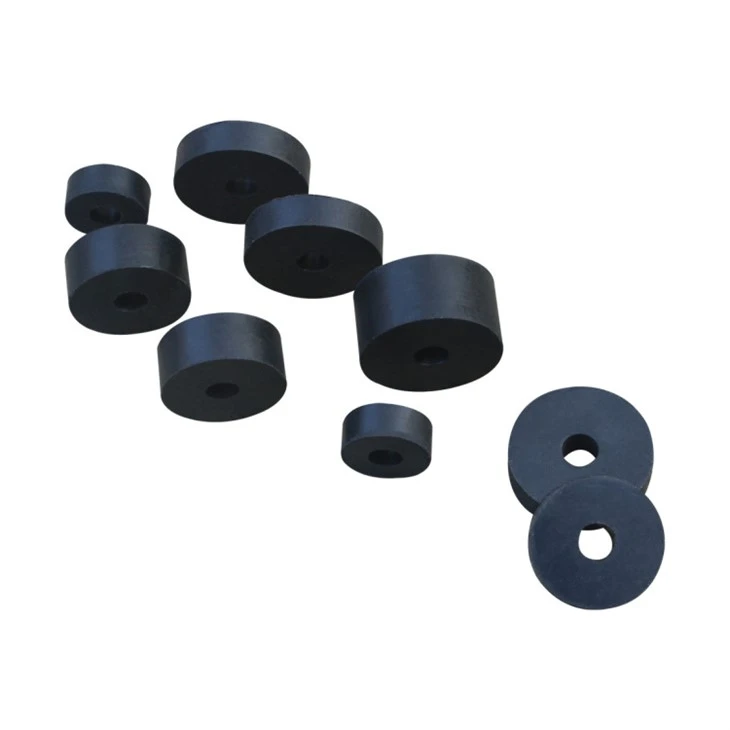
Top 10 Rubber Bumper Manufacturers In China
The following companies are introduced based on their product categories and manufacturing focus. The list is not a performance ranking.
| Company | Location | Main Products / Capabilities | Suitable For |
|---|---|---|---|
| Haining Chaoyue Seals Co., Ltd. | Haining, Zhejiang | Custom rubber bumpers, molded rubber components, seals, and rubber extrusions | OEM/ODM rubber components |
| Hangzhou Bright Rubber Plastic Product Co., Ltd. | Hangzhou, Zhejiang | Rubber bumpers, vibration dampers, and molded rubber parts | Industrial and automotive components |
| Haining Qianlang Rubber Products Factory | Haining, Zhejiang | Rubber dampers, molded rubber parts, seals, and extruded profiles | Machinery and vibration-control components |
| Dongguan Hanxiang Rubber Products Co., Ltd. | Dongguan, Guangdong | Rubber buffers, shock absorbers, and custom rubber components | Equipment protection and anti-vibration applications |
| Ningbo High-Tech Park Unimolding Rubber & Plastic Parts Co., Ltd. | Ningbo, Zhejiang | Rubber bumpers, grommets, and automotive rubber parts | Automotive and industrial components |
| Qingdao Senseco Materials Co., Ltd. | Qingdao, Shandong | Rubber dampers, rubber seals, and specialty rubber products | Industrial rubber components |
| Xiamen Neway Rubber & Plastic Products Co., Ltd. | Xiamen, Fujian | Silicone rubber parts, grommets, and molded plastic components | Custom rubber and plastic parts |
| Jinyuan Rubber | China | Molded rubber parts, engine mounts, and bonded rubber components | Industrial and automotive applications |
| Hangzhou Chinabase Power Transmission Co., Ltd. | Hangzhou, Zhejiang | Rubber buffers, anti-vibration mounts, and shock absorbers | Mechanical vibration control |
| Quanzhou Shengda Rubber Products Co., Ltd. | Quanzhou, Fujian | Rubber O-rings and other rubber components | Rubber component procurement |
Haining Chaoyue Seals Co., Ltd.
Haining Chaoyue Seals Co., Ltd. is a rubber sealing and molded rubber component manufacturer based in Haining, Zhejiang, China. With more than 20 years of industry experience, the company provides customized rubber products for customers who require components developed according to technical drawings, physical samples, dimensions, and application conditions.
Its product range covers five main categories: O Rings, Caps & Plugs, Gasket, Custom Parts, and Rubber Extrusion. Rubber bumpers fall within its custom rubber component capabilities, allowing customers to develop parts with specific geometries and dimensional requirements rather than relying exclusively on standard catalog specifications.
Rubber bumpers differ in geometry and mechanical function. A flat rubber pad used to protect a machine panel has different structural requirements from a cylindrical buffer installed between two moving components.
Chaoyue supports custom rubber component development through several stages:
Drawing and Sample Evaluation: Customers can provide 2D drawings, 3D files, or physical samples. Dimensions, structural details, and application requirements are reviewed before production.
Rubber Material Selection: Material options include NBR, EPDM, FKM, HNBR, silicone, and other rubber compounds, depending on the required resistance and operating environment.
Mold Development: Mold structures are developed according to the bumper's shape, dimensions, and molding requirements. This is particularly relevant for non-standard parts that cannot be sourced from standard catalogs.
Molding and Vulcanization: Rubber components are produced through applicable molding processes, including injection and compression molding, followed by vulcanization.
Inspection and Production: Dimensional and product inspections are conducted before components proceed to batch production and delivery.
Hangzhou Bright Rubber Plastic Product Co., Ltd.
Hangzhou Bright Rubber Plastic Product Co., Ltd. supplies rubber and plastic components, including rubber bumpers, vibration dampers, shock absorbers, and molded rubber parts. Its product range covers multiple rubber materials for customized industrial and automotive component applications.
Haining Qianlang Rubber Products Factory
Haining Qianlang Rubber Products Factory focuses on rubber seals, anti-vibration dampers, molded rubber components, and extruded profiles. Its product range serves machinery, automotive, electronics, construction, and other industrial applications.
Dongguan Hanxiang Rubber Products Co., Ltd.
Dongguan Hanxiang Rubber Products Co., Ltd. develops rubber buffers, shock absorbers, and custom rubber components. Its products are relevant to equipment protection and vibration-control applications, including motor and machinery assemblies.
Ningbo High-Tech Park Unimolding Rubber & Plastic Parts Co., Ltd.
Ningbo High-Tech Park Unimolding Rubber & Plastic Parts Co., Ltd. supplies custom rubber and plastic components, including automotive rubber bumpers, grommets, and molded parts. Its product range covers various rubber compounds and geometries for automotive and industrial applications.
Qingdao Senseco Materials Co., Ltd.
Qingdao Senseco Materials Co., Ltd. supplies rubber materials and finished rubber products, including rubber dampers, seals, and specialty rubber components. Its broader product portfolio may suit industrial customers sourcing different types of rubber parts.
Xiamen Neway Rubber & Plastic Products Co., Ltd.
Xiamen Neway Rubber & Plastic Products Co., Ltd. provides rubber and plastic components, including silicone rubber parts, grommets, gasket seals, and molded products. Its combined rubber and plastic product range is relevant to projects involving multiple component materials.
Jinyuan Rubber
Jinyuan Rubber focuses on molded rubber components, extruded profiles, rubber-to-metal bonded parts, and engine mounts. Its product categories are relevant to industrial and automotive applications requiring customized rubber structures.
Hangzhou Chinabase Power Transmission Co., Ltd.
Hangzhou Chinabase Power Transmission Co., Ltd. supplies mechanical and power transmission components, including rubber buffers, engine mountings, anti-vibration mounts, and shock absorbers. Its product range is relevant to mechanical assemblies requiring vibration isolation and impact protection.
Quanzhou Shengda Rubber Products Co., Ltd.
Quanzhou Shengda Rubber Products Co., Ltd. supplies rubber components, including O-rings and other sealing products. It may be considered by purchasers sourcing multiple types of molded rubber components.
What Rubber Material Matches the Working Environment?
| Material | Main Characteristics | Typical Considerations |
|---|---|---|
| NR (Natural Rubber) | Elasticity and resilience | Impact absorption and repeated compression |
| NBR | Oil resistance | Contact with mineral oils and lubricants |
| EPDM | Weather, ozone, and aging resistance | Outdoor equipment and exposed installations |
| Silicone | Temperature flexibility | Applications with specific temperature requirements |
| FKM | Chemical and heat resistance | Selected high-temperature or chemical-contact environments |
| SBR | Abrasion resistance | General-purpose mechanical cushioning |
Material selection should account for operating temperature, contact media, compression frequency, and expected service life. A compound suitable for an indoor machine may not perform the same way in an outdoor installation or oil-contact environment.
Which Manufacturing Details Affect Rubber Bumper Performance?
Before confirming a supplier, purchasers should review these technical details:
Rubber Hardness: Shore A hardness affects how much a bumper deforms under a given load. Both excessively soft and excessively hard compounds may cause installation or performance problems.
Compression Characteristics: Compression set and recovery behavior are important when a bumper remains under continuous pressure or experiences repeated loading.
Dimensional Tolerances: Height, diameter, mounting holes, and contact surfaces must match the equipment's installation structure.
Mold Design: Parting lines, draft angles, cavities, and insert positioning can affect the final component geometry and production consistency.
Bonding Structure: Rubber-to-metal bonding may be necessary when a bumper includes a metal mounting plate or threaded insert.
What Information Should Be Prepared Before Requesting a Quotation?
| Information | Purpose |
|---|---|
| 2D or 3D Drawing | Defines geometry and dimensional tolerances |
| Rubber Material | Identifies the required compound |
| Shore A Hardness | Establishes the target hardness |
| Operating Temperature | Determines material suitability |
| Working Load | Helps evaluate compression requirements |
| Installation Method | Clarifies mounting and fixing structures |
| Order Quantity | Supports mold and production cost calculations |
| Sample or Existing Part | Provides a physical reference for development |
Providing these details allows manufacturers to evaluate tooling, material selection, and production requirements before quotation.
Frequently Asked Questions About Rubber Bumper Manufacturers
Q1: Can rubber bumper manufacturers produce parts according to customer drawings?
Yes. Custom rubber manufacturers can develop non-standard bumpers based on 2D drawings, 3D models, or physical samples. The manufacturer generally reviews dimensions, material specifications, hardness, and molding feasibility before preparing the tooling.
Q2: What is the difference between a rubber bumper and a rubber vibration isolator?
A rubber bumper primarily absorbs impact or limits movement when components make contact. A vibration isolator is designed to reduce the transmission of continuous or repeated vibration between connected structures. Some rubber components perform both functions, depending on their geometry and compound properties.
Q3: Does a custom rubber bumper require a new mold?
Not always. If an existing mold matches the required dimensions and structure, it may be possible to use it. However, non-standard geometries, mounting structures, or dimensional changes may require new tooling or mold modifications.
Q4: How can manufacturers control dimensional consistency during mass production?
Manufacturers can establish inspection points for critical dimensions, including height, outer diameter, mounting-hole position, and molded features. First-article inspection and batch sampling help identify dimensional deviations before products are shipped.
Q5: What information determines the service life of a rubber bumper?
Service life depends on compound formulation, compression level, impact frequency, temperature, exposure to oils or chemicals, and environmental aging. These conditions should be considered together rather than evaluating the bumper by hardness alone.