

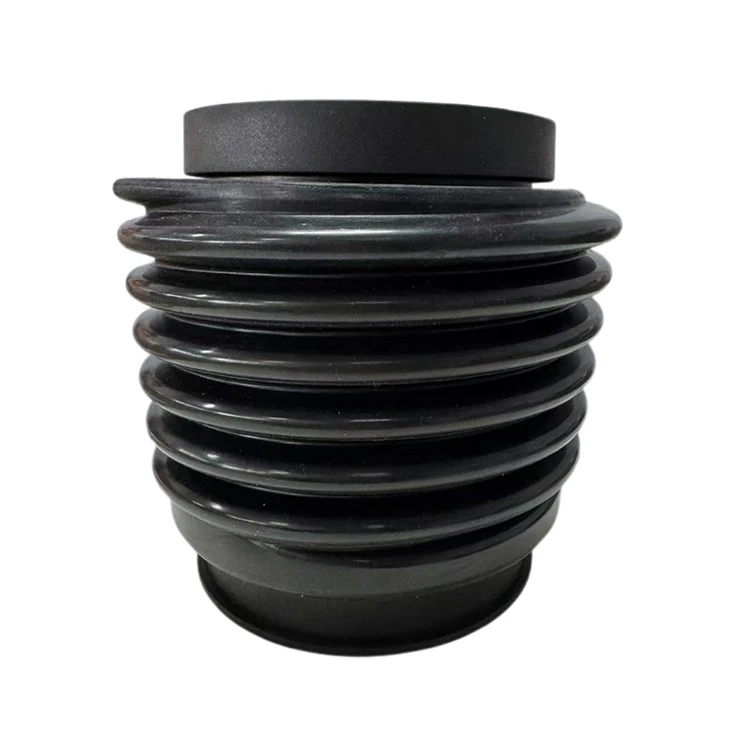
Industrial Rubber Bellows Performance
Repeated Flexing
The flexible rubber structure accommodates repeated compression, extension, and bending during normal equipment movement.
Controlled Movement
The corrugated sections distribute deformation across multiple folds, helping reduce concentrated stress during axial movement.
Component Protection
The bellows covers exposed shafts, rods, joints, and guide components to reduce contact with dust, chips, moisture, and other external contaminants.
Elastic Recovery
The rubber body returns toward its original shape after compression or extension, supporting repeated operating cycles without a rigid protective structure.
- Equipment-Specific Design
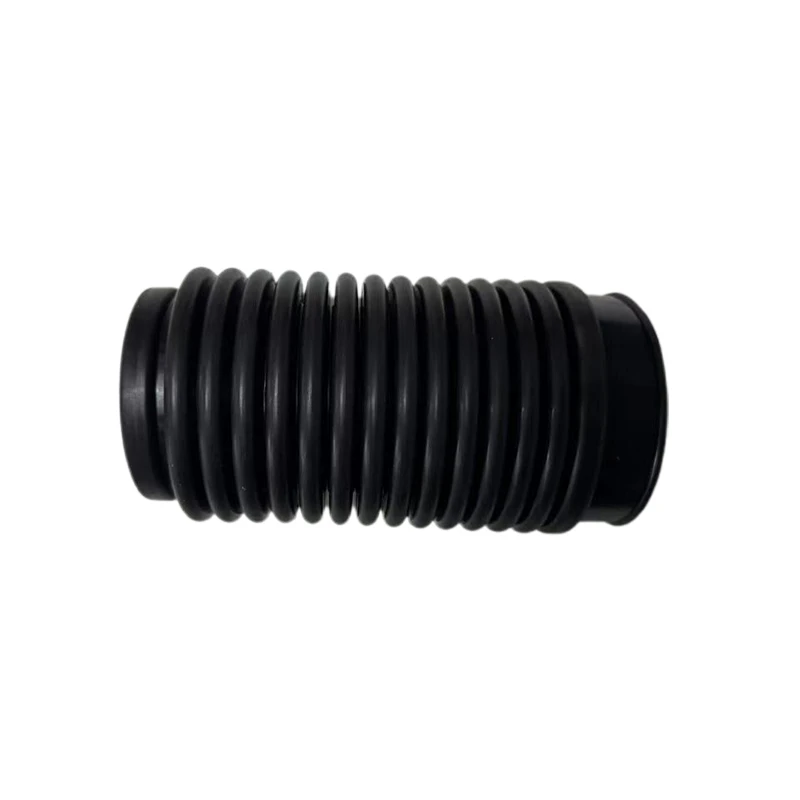
The bellows can be developed according to the actual equipment structure, movement path, installation space, and component position rather than using a fixed profile.
- Movement Requirement Matching
Custom designs can be evaluated according to stroke, movement frequency, bending conditions, and available clearance to reduce interference during equipment operation.
- Sample & Drawing Development
Chaoyue supports development based on customer drawings, existing samples, or component measurements. The design can be reviewed and adjusted before production tooling is finalized.
- Prototype to Volume Production
Customized bellows can be developed from initial samples through approved production, supporting both small trial quantities and repeat industrial orders.
FAQ
What information is needed to develop a custom industrial rubber bellows?
A drawing or sample is preferred. Key information includes installation dimensions, available space, operating stroke, movement type, temperature, contacted media, mounting method, and expected operating frequency.
How do I determine whether a bellows is suitable for a specific machine?
The bellows should be evaluated against the machine's movement path, available installation space, environmental exposure, and mounting arrangement. The compressed and extended lengths should also be checked against the actual equipment stroke.
Can industrial rubber bellows be used around rotating components?
They can be used in certain rotating applications, but the design must account for rotational speed, eccentricity, clearance, and mounting method. A bellows designed only for axial movement should not automatically be applied to continuous rotation.
What is the difference between a rubber bellows and a rubber boot?
A bellows normally uses multiple folds to accommodate movement, while a rubber boot may have a simpler cover structure. The appropriate design depends on the required stroke, bending movement, installation space, and protection requirements.


