

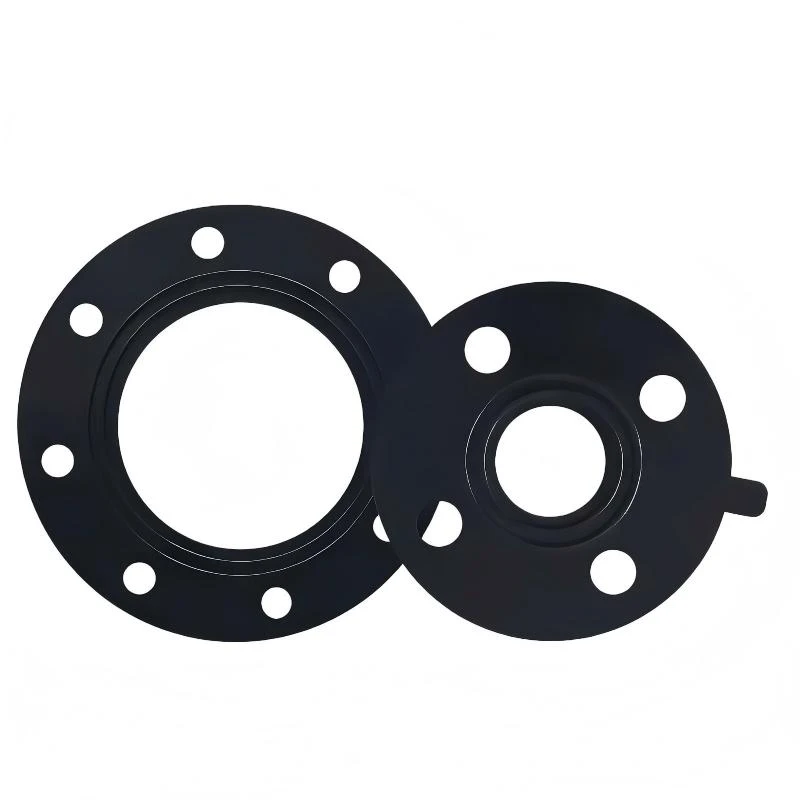
FKM Material Properties
FKM (Fluoroelastomer) is selected for flange gaskets where resistance to oils, fuels, chemicals, and elevated temperatures is required. The fluorine content in the polymer structure helps reduce swelling when exposed to many petroleum-based fluids and maintains sealing properties under demanding operating conditions.
Oil & Fuel Resistance
FKM maintains its sealing function when exposed to petroleum oils, fuels, lubricants, and hydraulic fluids.
Chemical Resistance
Suitable for contact with many solvents, chemicals, and industrial media. Compatibility should be confirmed according to the specific medium.
Temperature Resistance
FKM compounds are commonly selected for sealing applications involving elevated temperatures. The actual operating range depends on the compound formulation and service conditions.
Low Gas Permeability
The dense molecular structure of FKM helps reduce gas transmission compared with many general-purpose elastomers.


Quality Control
- Raw Material Inspection
FKM rubber compounds are checked before molding to verify material consistency and basic properties such as hardness and compound characteristics. This helps ensure the material is suitable for the specified sealing environment.
- Dimensional Inspection
Finished gaskets are measured for critical dimensions, including inner diameter, outer diameter, thickness, and profile shape. Dimensional verification ensures the gasket matches the required flange structure and installation conditions.
- Hardness & Appearance Testing
Rubber hardness is tested to confirm the material deformation characteristics under flange compression. Each gasket is also visually inspected for surface defects, incomplete molding, cracks, or irregular edges that may affect sealing contact.
- Batch Inspection & Traceability
Production batches are recorded with material and inspection information to support quality tracking during manufacturing and delivery. Inspection records can be provided according to customer requirements.
FAQ
What is an FKM Rubber Flange Gasket used for?
FKM Rubber Flange Gaskets are installed between flange connections to prevent leakage of fluids and gases. The gasket is compressed by bolts between two flange surfaces, creating a sealing interface for equipment and piping systems.
What makes FKM suitable for flange gasket applications?
FKM is selected for applications requiring resistance to oils, fuels, lubricants, and many chemical media. Its polymer structure helps reduce swelling and maintain sealing properties when exposed to demanding fluids.
Can you manufacture custom FKM flange gaskets?
Yes. Custom gaskets can be produced according to drawings, samples, or technical specifications. Custom options include dimensions, thickness, hardness, shape, and material formulation.
What is the difference between FKM and NBR flange gaskets?
FKM provides higher resistance to fuels, chemicals, and elevated temperatures, while NBR is commonly selected for applications involving petroleum oils and general hydraulic fluids. The suitable material depends on the working environment.


