


EPDM Rubber Material Properties
EPDM rubber is widely used in protective sleeve manufacturing because of its resistance to environmental exposure, flexibility, and long-term aging performance. Its material characteristics support the protection of components used in outdoor and industrial environments.
- Weather Resistance: EPDM rubber maintains its physical properties under prolonged exposure to outdoor conditions, including sunlight, rain, and changing weather.
- Ozone Resistance: The material offers good resistance to ozone exposure, helping reduce surface cracking during long-term outdoor use.
- Water Resistance: EPDM rubber has good resistance to water and moisture, making it suitable for protective sleeves used around components exposed to wet environments.
- Aging Resistance: Its resistance to environmental aging helps maintain material flexibility and structural integrity during extended service.
- Flexibility & Elasticity: EPDM rubber can accommodate bending, stretching, and dimensional changes during installation, allowing the sleeve to fit around different component profiles.
- Chemical Resistance: EPDM provides resistance to many diluted acids, alkalis, and polar substances. Compatibility should be confirmed for specific chemicals, oils, and operating environments.

Protective Functions & Product Features
EPDM rubber protective sleeves provide an external protective layer for components, helping reduce environmental exposure and mechanical contact during equipment operation.
- Dust & Moisture Protection: The sleeve covers exposed component surfaces, helping limit dust accumulation and moisture contact. The actual protection level depends on the sleeve structure and installation fit.
- Surface Abrasion Protection: The flexible rubber wall separates the protected component from direct contact with surrounding parts, reducing scratches and surface wear.
- Impact & Vibration Buffering: The elastic rubber structure absorbs part of the mechanical impact and vibration generated during equipment operation, helping reduce direct contact between components.
- Flexible Component Coverage: The rubber sleeve can be designed around straight, curved, or irregular component profiles to provide suitable external coverage.
- Edge & Connection Protection: Sleeves can cover exposed edges, joints, and connection areas to reduce damage caused by friction, handling, or contact with nearby components.
- Environmental Isolation: The EPDM covering helps separate protected components from direct exposure to rainwater, dirt, and other external environmental factors.
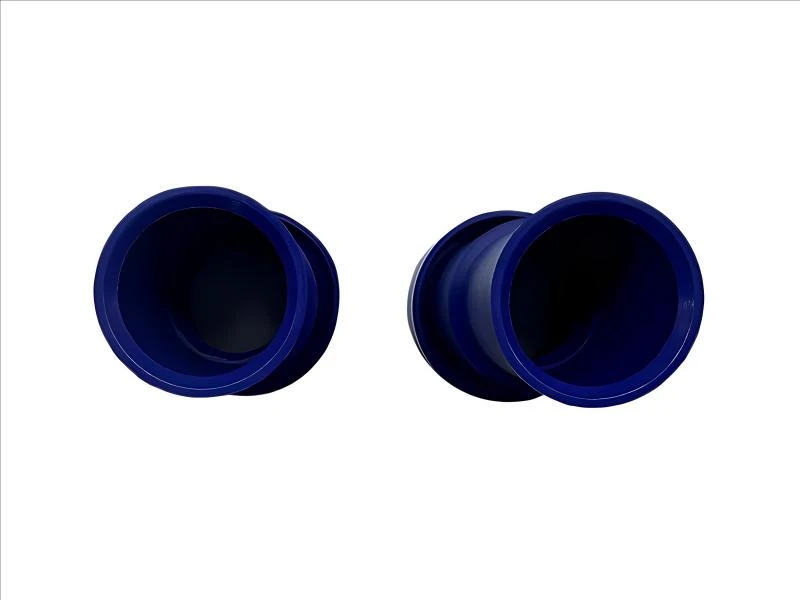
Custom EPDM Rubber Protective Sleeves
HNCY Seal can develop EPDM rubber protective sleeves according to customer drawings, samples, and application requirements. Customization focuses on product dimensions, structural design, and material specifications.
- Custom Dimensions: Inner diameter, outer diameter, overall length, and other dimensional requirements can be specified according to the installation position.
- Wall Thickness Adjustment: Rubber wall thickness can be designed according to the required coverage, flexibility, and available installation space.
- Hardness Selection: EPDM rubber hardness can be selected according to installation conditions, deformation requirements, and the desired level of structural support.
- Shape & Structural Design: Different sleeve profiles, including straight, tapered, flanged, or other application-specific shapes, can be evaluated according to drawings.
- Color Options: Black and other available colors can be discussed according to project specifications and material availability.
- Drawing & Sample-Based Development: Technical drawings or physical samples can be used as references for mold development, dimensional confirmation, and product evaluation before bulk production.
Manufacturing Process & Quality Control
Mold Design & Development
Develop product molds according to technical drawings, sample dimensions, and structural requirements. Mold specifications are confirmed before production to ensure the required sleeve profile.
Rubber Molding & Vulcanization
Process EPDM rubber compounds through the selected molding method. Vulcanization parameters are controlled to achieve the required product shape, hardness, and physical properties.
Trimming & Surface Finishing
Remove excess rubber and molding flash from finished sleeves. Check edges, openings, and surface appearance to ensure clean finishing and proper assembly fit.
Dimensional Inspection & Quality Control
Inspect critical dimensions, including inner diameter, outer diameter, length, and wall thickness. Rubber hardness and visible surface defects are also checked against product specifications.
FAQ
Do custom EPDM rubber sleeves require new molds?
Not necessarily. Existing molds may be used if their dimensions and structure match the required product. For new designs or non-standard configurations, dedicated mold development may be necessary. Mold requirements and costs can be confirmed after reviewing the technical drawings.
Can you develop prototypes before mass production?
Prototype development can be arranged according to project requirements. Initial samples allow buyers to evaluate the product's appearance, assembly compatibility, and dimensional suitability before confirming mass production.
What is the minimum order quantity for custom rubber protective sleeves?
MOQ depends on the product structure, mold requirements, material preparation, and production arrangement. Buyers can provide the expected order volume so the manufacturer can evaluate a suitable production plan.
Can EPDM rubber sleeves be supplied for long-term production projects?
Yes. For ongoing projects, product drawings, approved samples, and confirmed specifications can be used as production references for repeat orders. This helps maintain consistency between different production batches.
Can you manufacture rubber sleeves based on an existing product sample without technical drawings?
Yes. An existing physical sample can be used as a reference for product evaluation and reverse measurement. The manufacturer can assess its structure and dimensions before confirming whether a corresponding mold and production process are required.


