

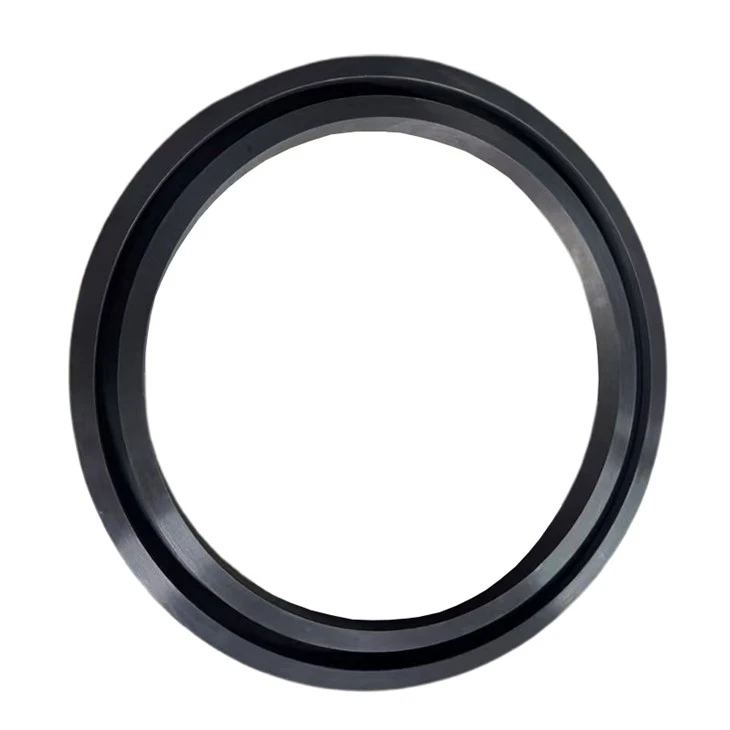
Locking Tab Structure & Ring Design
Integrated Locking Tab
The locking tab is formed as part of the rubber component, with its shape and position designed according to the mating part configuration.
Ring Body Geometry
The circular sealing section is manufactured according to specified inner diameter, outer diameter, and cross-sectional dimensions to match the installation space.
Tab Position & Alignment
The tab's position relative to the ring body is controlled to ensure correct orientation during assembly and compatibility with the corresponding engagement feature.
Molded Profile Details:
The transition between the locking tab and the main ring body requires attention to mold design and dimensional control to maintain the intended geometry.
Sealing Interface & Contact Performance
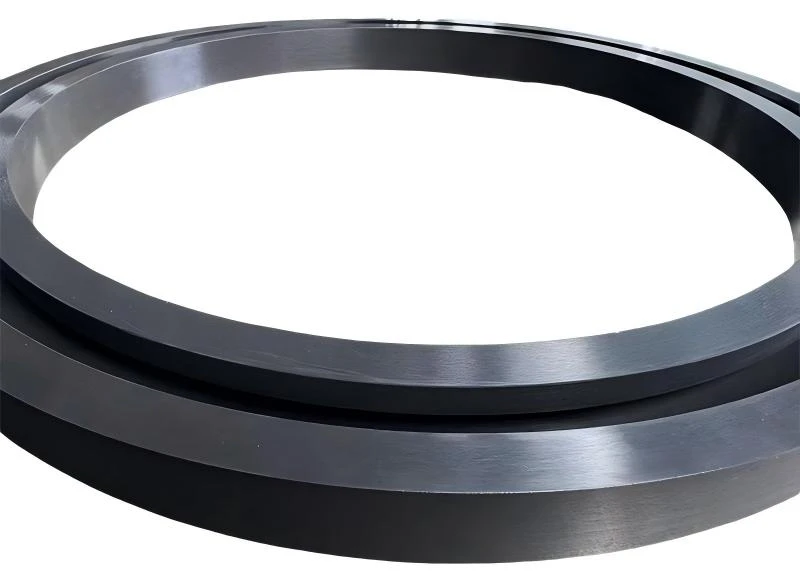
The sealing performance of the locking seal ring depends on the contact between its rubber body and the mating surfaces. Dimensional compatibility and the installed compression condition determine how the sealing section interacts with the surrounding components.
- Sealing Contact Area: The ring body is designed to contact the corresponding sealing surface, with its cross-sectional dimensions matched to the available groove or installation space.
- Compression Compatibility: The installed compression amount should be determined according to the ring dimensions, groove geometry, and material hardness to avoid insufficient contact or excessive deformation.
- Mating Surface Requirements: Groove dimensions, surface finish, and assembly clearance should be considered during product development to achieve the required sealing interface.
- Installation Position Stability: The locking tab provides an additional locating feature where the mating assembly is designed for tab engagement, helping maintain the specified ring orientation during installation.
FKM Material Properties & Chemical Resistance
FKM (Fluoroelastomer) is selected for sealing applications requiring resistance to oils, fuels, and various chemical media. For this locking seal ring, compound selection needs to account for both the operating environment and the mechanical requirements of the molded component.
- Oil & Fuel Resistance: FKM compounds offer resistance to many mineral oils, lubricants, and fuels, making them suitable for sealing applications involving these media. Compatibility should be verified against the specific fluid composition.
- Chemical Compatibility: Different FKM formulations provide different resistance levels to chemicals, additives, and process fluids. Material selection should consider the actual medium, concentration, and exposure conditions.
- Hardness & Mechanical Properties: Shore A hardness, tensile strength, and elongation can be specified according to the required sealing contact and locking tab deformation characteristics.
- Operating Temperature: FKM is commonly selected for applications involving elevated operating temperatures. The applicable temperature range depends on the compound grade, media, and service conditions.
Custom Design & Dimensional Specifications
Ring Dimensions
Inner diameter, outer diameter, cross-sectional thickness, and overall ring geometry can be customized to match the installation space.
Material & Hardness
Different FKM compound formulations and Shore A hardness grades can be evaluated based on the required chemical exposure and mechanical performance.
Tooling Development
Custom molds can be developed for non-standard ring profiles and locking tab geometries. Technical drawings or reference samples can be provided for tooling evaluation.
Sample Approval
Prototype samples can be arranged for dimensional verification and assembly testing before confirming the specifications for volume production.
FAQ
What information is required to develop a custom FKM locking seal ring?
Buyers should provide a 2D technical drawing, 3D model, or physical sample. Details such as the ring dimensions, locking tab geometry, material requirements, and application specifications help determine the tooling design and manufacturing process.
Can you manufacture locking seal rings according to existing component drawings?
Yes. Chaoyue can review customer drawings and develop the rubber component according to the specified dimensions and assembly requirements. The drawing should include the locking tab position and relevant dimensional tolerances.
Can you supply different colors for FKM locking seal rings?
Yes. Color requirements can be discussed according to the available FKM compound formulations and application specifications. Buyers should confirm the required color during the quotation and sample approval stages.


