

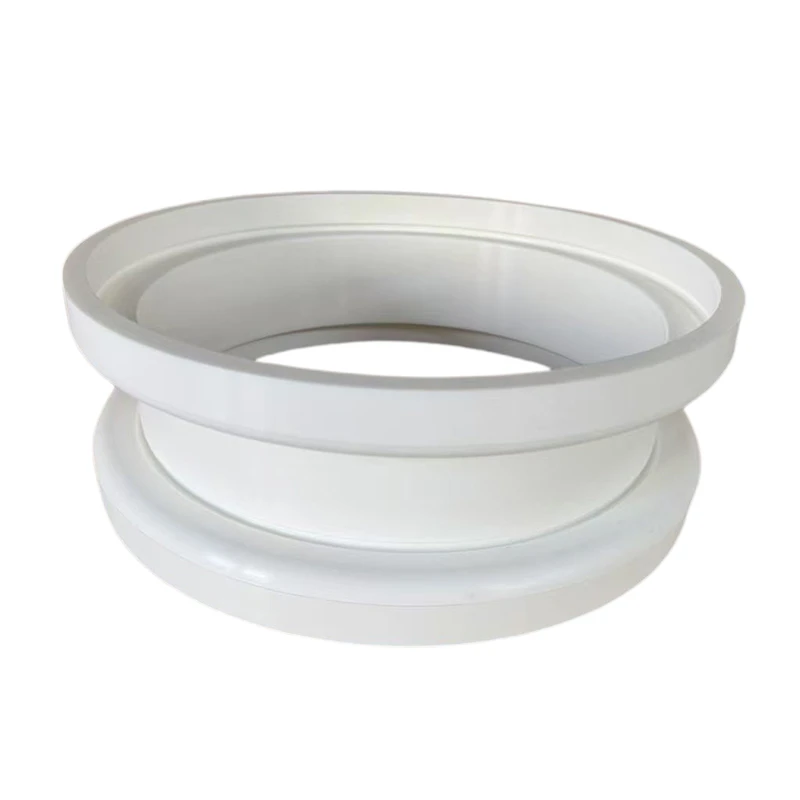
The Silicone Flexible Connector features an integrated double-flanged structure with a short cylindrical body and a circular internal passage. Both ends are formed with raised annular edges, creating defined contact areas for connection with corresponding equipment or pipe interfaces. The compact profile allows the connector to fit into assemblies where a flexible interface is required within limited installation space.
- Double Flanged End Design: The two raised circular edges provide continuous annular contact surfaces. Their outer diameter, profile height, and thickness can be designed according to the mating interface and assembly dimensions.
- Cylindrical Connector Body: The central section connects both flanged ends through a short tubular structure. Its diameter, length, and wall thickness influence the overall geometry and deformation behavior of the connector.
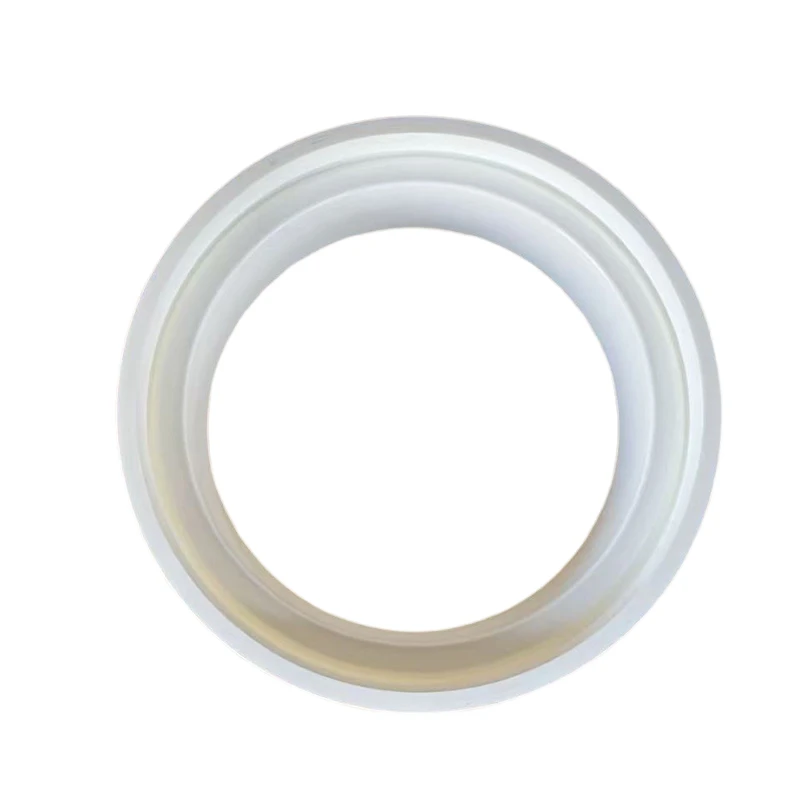
- Circular Internal Passage: The open bore maintains a continuous passage through the component. Inner diameter and bore geometry should correspond to the connected equipment to avoid dimensional interference during installation.
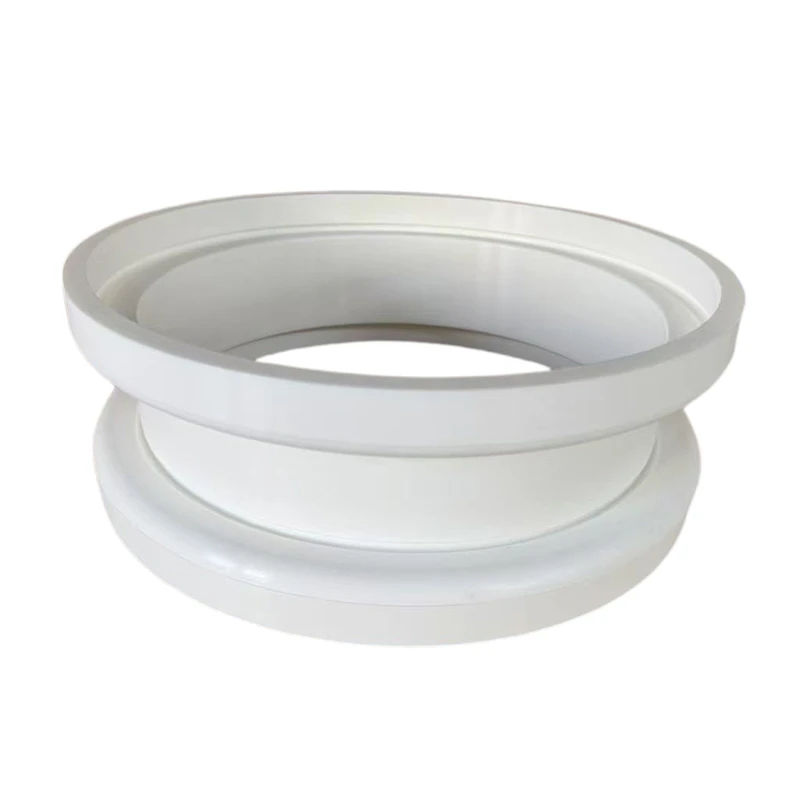
Silicone Material Properties
Silicone rubber is used for its combination of elasticity, thermal stability, and resistance to environmental aging. For flexible connector applications, material selection affects the component's ability to maintain its shape, respond to compression, and perform under different operating temperatures. The silicone compound can be selected according to the mechanical and environmental requirements of the intended application.
- Temperature Resistance: Silicone rubber retains its elastic characteristics across a broad temperature range. The applicable operating limits depend on the silicone grade, formulation, and exposure conditions.
- Elasticity & Resilience: The material can deform under applied pressure and recover its original shape after the load is released. This property is relevant to connectors subjected to repeated compression during assembly or operation.
- Compression Set Resistance: Resistance to permanent deformation under prolonged compression affects how well the material maintains its original thickness and contact characteristics over time.
- Aging Resistance: Silicone compounds offer resistance to thermal aging and maintain their physical properties under suitable operating conditions. Actual service performance depends on temperature, exposure duration, and contact media.
Flexible Connection & Sealing Performance
The double-flanged configuration provides a flexible interface between two mating components. During installation, the connector's end profiles are positioned against the corresponding connection surfaces, where dimensional compatibility and appropriate compression determine the quality of the assembly. Its flexible central body accommodates deformation within the limits of the product design.
- Interface Compatibility: Inner diameter, outer diameter, and flange geometry must match the dimensions of the connected components. Proper dimensional coordination helps prevent misalignment and interference during assembly.
- Compression & Contact Sealing: The flanged edges can form sealing contact surfaces when compressed against compatible mating parts. Contact pressure, flange thickness, surface condition, and fastening arrangement all influence sealing performance.
- Flexible Deformation: The silicone body can accommodate limited deformation caused by installation tolerances or relative movement between connected components. The allowable deformation depends on wall thickness, material hardness, and connector geometry.
- Installation Considerations: The connector should be installed without excessive stretching, twisting, or uneven compression. The mating surfaces and fastening method should be evaluated to ensure consistent contact around the circumference.
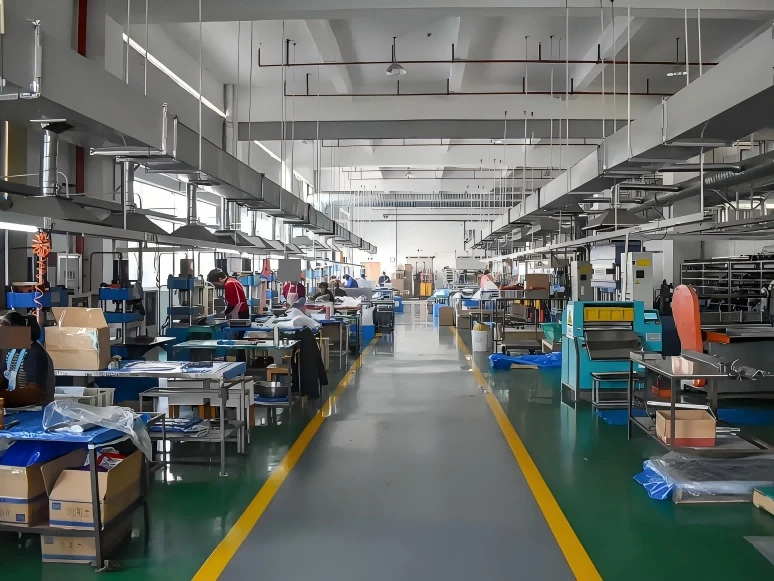
Custom Silicone Flexible Connector Manufacturing
Chaoyue provides custom silicone flexible connector manufacturing for applications requiring specific flange profiles, connector dimensions, and material properties. Production can be arranged according to customer drawings, dimensional specifications, or physical samples. From mold development to finished component inspection, the manufacturing process focuses on matching the required geometry and material characteristics.
- Dimensional Customization: Inner diameter, outer diameter, overall length, wall thickness, and flange dimensions can be adjusted according to equipment interfaces and installation requirements.
- Flange Profile Development: Flange width, height, thickness, and edge geometry can be evaluated based on the mating structure and required contact area.
- Silicone Hardness & Compound Selection: Different silicone hardness grades and material formulations can be considered according to compression requirements, flexibility, and operating conditions.
- Color & Appearance Options: White and other customized colors can be evaluated according to product identification or application requirements.
- Drawing & Sample-Based Production: Customers can provide 2D drawings, 3D files, dimensional specifications, or physical samples for product evaluation, mold development, and manufacturing.
FAQ
Can Silicone Flex Connectors Be Used With Different Types of Media?
Media compatibility depends on the silicone compound and the chemical properties, concentration, and temperature of the contacting substance. The intended medium should be specified before material selection to determine whether the selected silicone grade is suitable.
How Do I Determine the Correct Connector Size for Existing Equipment?
Measure the mating interface, including the opening diameter, contact surface dimensions, available installation space, and required flange profile. Comparing these measurements with the connector drawing helps identify potential dimensional mismatches before production.
What Factors Affect the Expected Service Life of a Silicone Flex Connector?
Service life is influenced by operating temperature, compression level, mechanical loading, exposure to chemicals, and installation conditions. Material selection and dimensional design should be evaluated against the actual working environment.
How Should Silicone Flex Connectors Be Stored Before Installation?
Store the connectors in a clean, dry environment away from direct sunlight, excessive heat, sharp objects, and incompatible chemicals. Avoid unnecessary compression or deformation during storage to maintain their original shape.


