

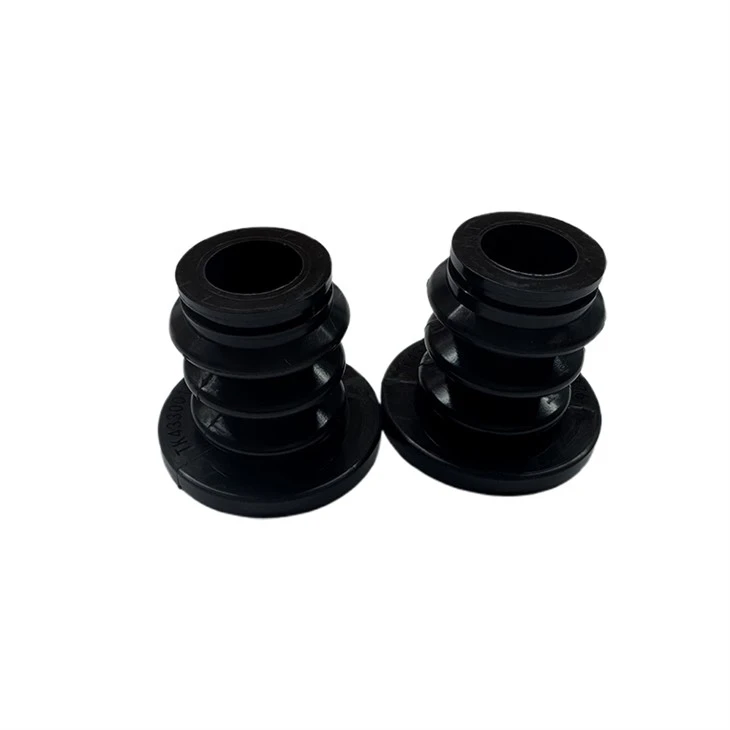
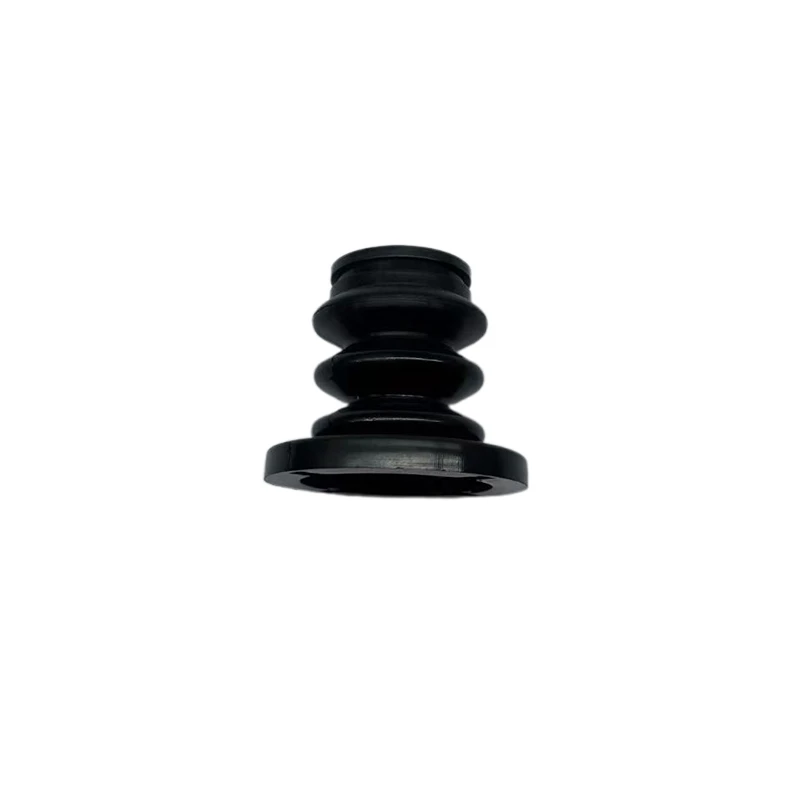
Skeleton-Reinforced Rubber Bellows combine a flexible rubber body with an internal supporting skeleton. The rubber provides the flexibility required for repeated movement, while the skeleton helps support the bellows structure and maintain its designed profile during operation.
- Rubber Compound Selection: Rubber compounds can be selected according to the operating temperature, environmental exposure, and required flexibility of the bellows. Material selection should also consider contact with oils, chemicals, or other substances in the working environment.
- Internal Skeleton Support: The integrated skeleton provides structural support within the rubber body, helping maintain the designed cross-sectional shape and reducing uncontrolled deformation during operation.
- Rubber-Skeleton Integration: The rubber body and supporting skeleton are incorporated into one component. Their structural arrangement affects the flexibility, dimensional stability, and deformation characteristics of the finished bellows.
- Convolution Wall Structure: The rubber walls and reinforced sections work together to form the individual convolutions. Wall thickness and skeleton configuration influence how each fold responds to compression, extension, and bending.
Bellows Geometry & Movement Performance
The multi-convolution geometry allows reinforced rubber bellows to accommodate movement between connected mechanical components. The number, depth, and spacing of convolutions influence the available deformation range and installation requirements.
- Axial Compression: The individual convolutions deform along the axial direction when the bellows is compressed. The available compression distance depends on convolution depth, wall thickness, and the designed minimum installation length.
- Axial Extension: The bellows can extend as the distance between connected components increases. The maximum extension should be controlled according to the designed movement range to avoid excessive stretching of the rubber body and internal skeleton.
- Bending Movement: The flexible convolution structure accommodates a certain degree of angular displacement between connected components. The allowable bending range depends on the bellows geometry and skeleton configuration.
- Shape Retention: The internal skeleton supports the rubber body during repeated deformation, helping the bellows maintain its intended profile instead of relying entirely on the flexibility of the rubber material.
- Movement Clearance: Sufficient installation clearance should be provided around the bellows to prevent adjacent equipment parts from interfering with the convolutions during compression, extension, or bending.
Structural Protection & Functional Features
Reinforced rubber bellows provide a flexible protective enclosure around moving mechanical components. Their closed convolution body and end structures help isolate covered areas from external contaminants while accommodating equipment movement.
- Dust & Particle Protection: The enclosed bellows structure helps prevent dust, metal particles, and other contaminants from directly entering the covered mechanical area.
- Moving Component Coverage: The hollow interior accommodates components such as shafts, rods, and connecting sections, providing external coverage without requiring a rigid protective housing.
- Mechanical Contact Isolation: The rubber outer surface creates a protective barrier between the covered component and surrounding equipment structures, reducing direct contact with external objects.
- Flexible Protective Enclosure: The convolution design allows the protective cover to change length as the connected components move, maintaining coverage without restricting the designed movement range.
- Environmental Separation: When properly fitted at both ends, the bellows helps limit direct exposure of internal components to dust, splashes, and other external contaminants. The actual protection level depends on the end connections and installation conditions.
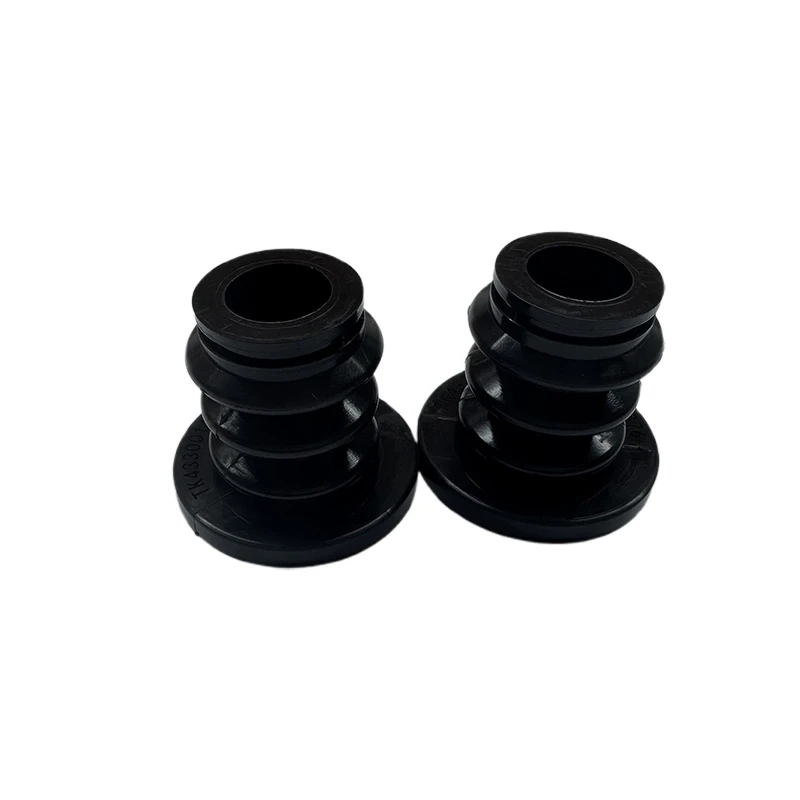
Custom Skeleton-Reinforced Rubber Bellows
Chaoyue supports custom reinforced rubber bellows development according to equipment drawings, physical samples, and mechanical movement requirements. Customization covers product dimensions, convolution profiles, internal skeleton configurations, and end connection structures.
Dimensions & Convolution Design
Customize inner diameter, outer diameter, overall length, wall thickness, number of convolutions, fold depth, and spacing according to equipment dimensions and required movement range.
Internal Skeleton & Material Configuration
Specify the skeleton arrangement, support structure, rubber compound, and material hardness according to the required structural stability, flexibility, and operating environment.
End Flange & Connection Design
Customize flange diameter, thickness, central opening, and end profiles to match equipment mounting interfaces and mechanical connection requirements.
Drawing & Sample-Based Development
Chaoyue evaluates technical drawings or physical samples to confirm product dimensions, structural details, material requirements, and manufacturing specifications before production.
FAQ
Can the internal skeleton structure be evaluated separately during product development?
Yes. The skeleton configuration can be reviewed as part of the overall product design. Buyers can provide available structural drawings, material information, or reference samples to help confirm the required construction before manufacturing.
Is mold development required for custom reinforced rubber bellows?
Mold requirements depend on the product geometry, existing tooling availability, and manufacturing process. Existing molds may be considered when their dimensions and structure match the required design. New or significantly modified designs may require dedicated tooling.
Can samples be approved before bulk production?
Sample evaluation can be arranged according to project requirements. Buyers can review the sample against the confirmed drawing and technical specifications before approving the production version. This helps establish a reference for subsequent manufacturing batches.


